Case file · Geopolitics · 12 min read
The Iran Ceasefire Is Theater
Iran opened Hormuz on April 17. Every outlet led with it. None answered what matters: enrichment capability is untouched in any current framework.
The Arc of Power ·
The Iran Ceasefire Is Theater: What the Hormuz Opening Hides About the Nuclear Sprint
Iran opened the Strait of Hormuz on April 17. Every major outlet led with it. The New York Times, BBC, Reuters, Al Jazeera — the framing was uniform: a significant concession, a de-escalatory gesture, evidence the ceasefire is holding. None of them answered the question that actually matters.
The question is not whether ships can move through the Strait of Hormuz. The question is whether Iran retains, at the end of this process, the physical infrastructure to produce weapons-grade uranium. Everything else — the Hormuz opening, the ceasefire extension odds on Polymarket, the European emergency summit — is secondary to that single structural question. And as of April 17, 2026, no current ceasefire framework has addressed it.
What the Ceasefire Actually Is
Let's be precise about what happened on April 17 and what it means.
Iran's Foreign Minister declared the Strait of Hormuz "completely open for commercial shipping." Trump simultaneously told reporters the strait is "fully open" and that the war is "going along swimmingly." Iran separately issued a statement — covered by Al Jazeera — declaring that it "rejects a temporary ceasefire" and instead "seeks an end to the war across the region."
Read those two positions together and a clear picture emerges. Iran opened the strait not as a concession but as a good-faith gesture toward the negotiating table. Tehran wants a comprehensive settlement — a full end to hostilities, not another two-week pause on the same unresolved terms. The Hormuz opening is a signal that Iran is willing to reduce economic pain as a negotiating move. It is emphatically not a signal that Iran has agreed to give up anything it considers structurally essential.
What Iran considers structurally essential is uranium enrichment on Iranian soil. That position has not changed in two decades of nuclear negotiations, across the JCPOA era, the maximum pressure era, and the current conflict. The opening of the Strait of Hormuz does not touch it.
What the Ceasefire Doesn't Address
The Economist ran two pieces in sequence on April 15 that together define the actual endgame: "How close is Iran to having a nuclear weapon?" and "Will the Iranian regime now sprint for a nuclear bomb?" These are not adjacent questions — they are the same question at different time horizons.
The first piece establishes the baseline: Iran has been enriching uranium to 60% purity for several years, and has demonstrated the technical capability to reach weapons-grade 90% enrichment within days to weeks if it chose to. The enrichment infrastructure — the centrifuge cascades at Natanz and Fordow — survived the US-Israeli strike campaign that opened the conflict. The IRGC dispersed and hardened the most critical components before hostilities began.
The second piece asks whether the conflict conditions have changed Tehran's incentives. The answer the Economist reaches is the analytically correct one: the strikes that killed the supreme leader and cratered the economy may have increased the incentive to sprint, not decreased it. A weakened, economically devastated Iran that retains enrichment capability has one strategic card left to play. A weakened, economically devastated Iran that surrenders enrichment capability has none.
The three specific gaps in the current ceasefire framework are:
1. No agreement on enrichment levels. The ceasefire that went into effect after the April 8 framework has not produced any publicly documented agreement on what Iran does with its enrichment infrastructure during the pause — let alone after it. Iran's ten-point framework includes language stipulating continued enrichment on Iranian soil. The US side has not publicly accepted that language.
2. No IAEA access restoration. Iran suspended IAEA Additional Protocol inspections in 2021 and has not restored them. During the ceasefire, there are no verified external eyes on the enrichment program. Centrifuges may be spinning at any level; the international community has no way to verify the actual status.
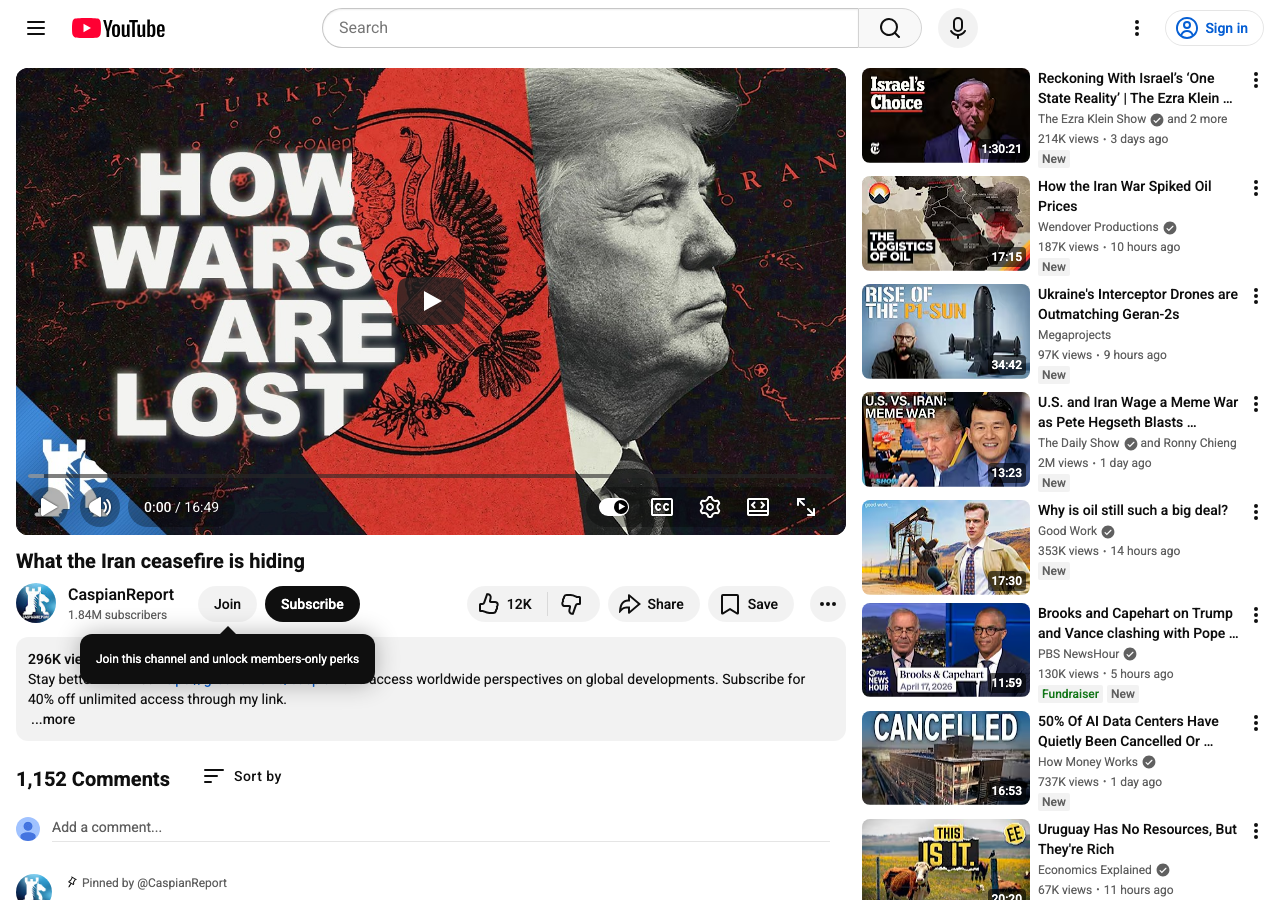
3. No mechanism for preventing a nuclear sprint. CaspianReport's April 14 analysis "What the Iran Ceasefire Is Hiding" — the sharpest available synthesis — makes the key structural point: a ceasefire that does not include a verified halt to enrichment activities is not just incomplete, it is actively dangerous. Every day of ceasefire that passes without enrichment constraints is a day of potential progress toward weapons-grade material. The clock does not pause because the guns have.
The European Summit: A Structural Signal, Not a Diplomatic Footnote
On April 17, as Iran reopened the Strait, Macron, Starmer, Meloni, and Merz convened an emergency meeting in Paris on the Hormuz crisis. Reuters and Sky News covered the joint statement. France 24 headlined "Europe leads postwar security talks."
Most coverage framed this as European allies trying to get a seat at the peace table. That framing is correct but insufficient. The more significant signal is what the summit's convening represents: EU leaders coordinating an independent response to the consequences of a US foreign policy decision.
The Hormuz blockade hit European allies harder than it hit the United States. Europe runs on seaborne energy imports in a way the US no longer does. The IEA chief confirmed this week that Europe is down to six weeks of jet fuel reserves — the fastest energy shock to allied economies since the 1973 oil embargo. European airlines are warning of airfare increases. The economic damage was not incidental; it was the predictable result of a US military decision made without meaningful allied consultation.
The Macron-Starmer-Meloni-Merz summit is not just a diplomatic photo opportunity. It is four major European governments signaling that they will coordinate their own position on the Iran nuclear outcome — including, implicitly, on whether to use EU sanctions leverage as part of any framework. This is a new behavior pattern in transatlantic relations. European allies have historically been irritated by US unilateralism but have ultimately followed. The emergency coordination signals that the cost of following has exceeded the threshold.
What this means for the nuclear endgame: If the US negotiates a bilateral deal with Iran that includes terms Europe finds inadequate — particularly on enrichment — Europe now has both the motivation and the visible coordination infrastructure to offer Iran a competing framework. A European enrichment deal modeled on the JCPOA would shatter the US negotiating position. Washington knows this, which is why Macron's phone to Tehran (reported by France 24) is as important as any US-Iran channel.
What the Market Is Pricing — and Where It's Wrong
Polymarket's current pricing on the Iran conflict deserves careful reading because it is simultaneously useful data and a source of structural confusion.
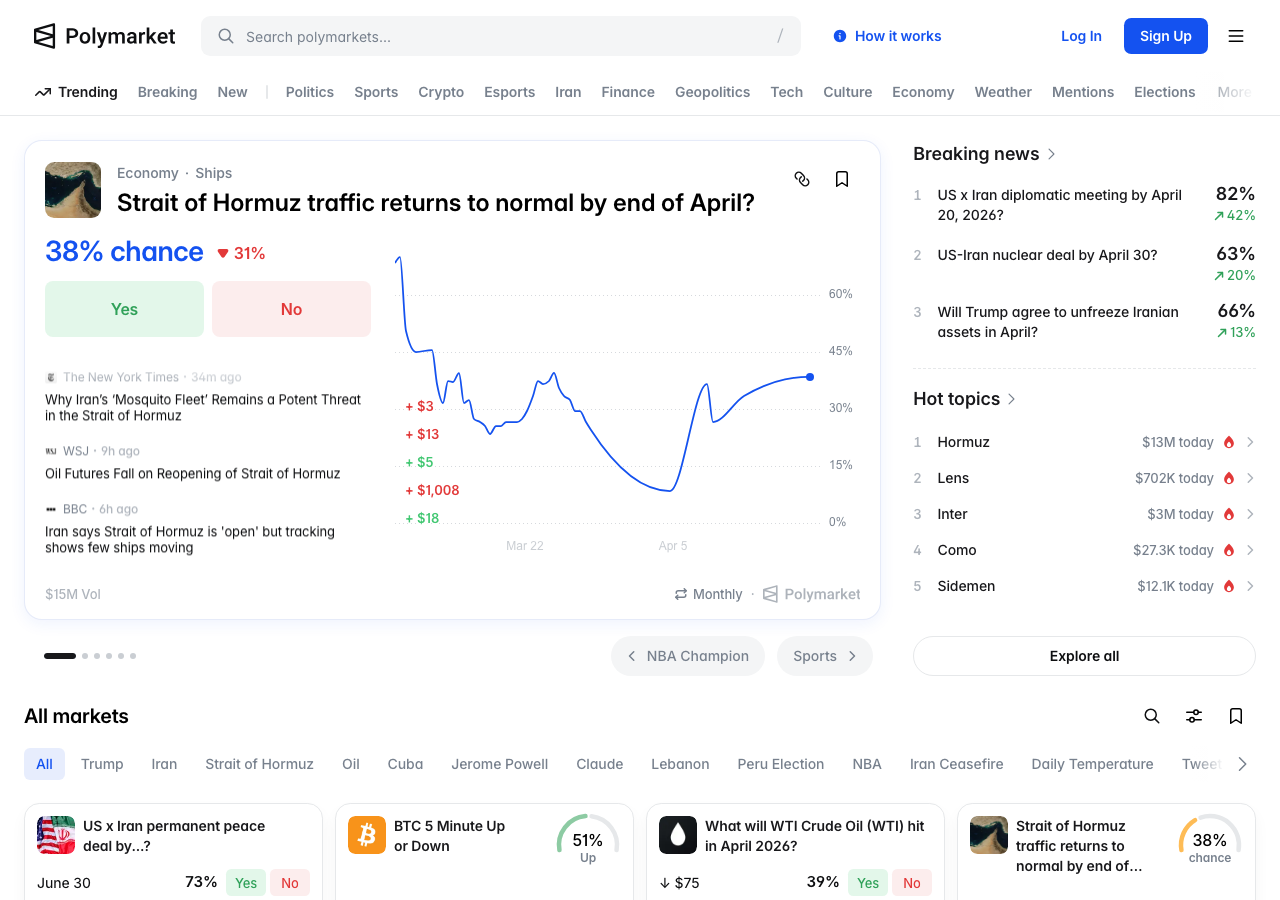
The key contracts as of April 16-17:
- US-Iran ceasefire extended by April 22: 63% Yes
- Strait of Hormuz traffic returns to normal by May 31: 53.5% Yes (coin-flip)
- Iran-US conflict ends by December 31, 2026: 95–96% Yes
- US-Iran nuclear deal by April 30: 63% Yes (per Polymarket's breaking news sidebar)
The 95–96% on conflict resolution by year-end is the market saying: this ends somehow. That is almost certainly right. Every conflict ends. The question is what "ends" means.
The 63% ceasefire extension is the market saying: probably another pause, probably more negotiation time. That is a reasonable probability given the Hormuz opening and the European pressure.
But here is where the crowd's pricing gets analytically misleading: the crowd is pricing the probability of a deal, not the quality of the deal. A deal that extends the ceasefire past April 22, reopens Hormuz permanently, and leaves Iran's enrichment infrastructure intact at 60% purity is "a deal." It also leaves the structural nuclear question entirely unresolved. Polymarket cannot price the adequacy of a deal's terms — only the existence of one.
Our assessment: the Radar read is correct that "Hormuz lifted by May 31 at 80%" is approximately 15 percentage points too high given that Iran's enrichment red line remains unresolved. The crowd has priced conflict termination as equivalent to conflict resolution. Those are different outcomes.
The April 22 Deadline: Four Scenarios
The current ceasefire framework appears to have a formal review point on or around April 22 — five days from now. Here is the scenario structure:
Scenario 1 — Extended pause, enrichment question deferred (Medium-High, ~45%) The ceasefire is extended for another 2–4 weeks. Iran maintains Hormuz access. Enrichment talks are described as "ongoing" with no specific commitments. The European summit produces a parallel track that US negotiators treat as supportive rather than competing. The nuclear question is neither resolved nor publicly acknowledged as the central obstacle. Leading indicator: Trump announces a ceasefire extension with language about "tremendous progress" but no reference to enrichment.
Scenario 2 — Partial deal, enrichment freeze but not rollback (~25%) US and Iran reach a limited agreement: Iran accepts a verified halt at current enrichment levels (60%) in exchange for partial sanctions relief. IAEA inspectors return in a limited capacity. Enrichment infrastructure remains intact but capped. This is essentially a JCPOA-minus — less comprehensive, more fragile, but verifiable. Leading indicator: Joint statement references "enrichment monitoring" or "IAEA access" as part of the terms.
Scenario 3 — Ceasefire collapses, no extension (~20%) Iran and the US fail to extend the ceasefire past April 22. Hostilities resume at some level — likely below the peak intensity of the initial strikes, given domestic US political cost and European pressure. Enrichment status returns to opacity. The nuclear sprint risk becomes acute. Leading indicator: Iranian FM makes hardline public statement on "preconditions" before April 20.
Scenario 4 — Comprehensive deal including enrichment rollback (Low, ~10%) Iran agrees to reduce enrichment to 3.67% (JCPOA levels) in exchange for comprehensive sanctions relief and security guarantees. Full IAEA access restored. Politically difficult for both sides domestically but structurally the only outcome that actually resolves the nuclear question. Leading indicator: Saudi Arabia and UAE make public statements supporting a framework, signaling regional buy-in Iran requires to justify the concession domestically.
The Nuclear Sprint: What Actually Matters
The coverage pattern on this crisis has been consistent since it began: lead with the kinetic and the visible, bury the structural and the slow-moving. The Hormuz opening is visible and immediate — it moves oil prices, airline stocks, and shipping volumes in real time. The enrichment timeline moves in centrifuge cascades over months.
But the enrichment timeline is the actual endgame. Everything else is process.
China's role in this equation adds a further structural complication: Beijing has been buying Iranian oil throughout the conflict, has been positioned as a potential mediator, and has signaled calibrated military support through the MANPADS intelligence reporting. If the US-Iran nuclear deal comes through a Chinese mediation channel, the terms will reflect Chinese interests — specifically, an outcome that leaves Iran's enrichment capability intact as a permanent feature of the regional order, because a non-nuclear Iran that is fully reintegrated into the Western economic system is less useful to Beijing than a semi-pariah Iran that remains dependent on Chinese trade relationships.
The Hormuz opening is real. The ceasefire is real. The April 22 deadline is real. None of them resolve the underlying question. When analysts at CSIS and RAND write about Iran nuclear risk in 2027, the April 2026 ceasefire will feature as either the moment the nuclear question was finally addressed — or the moment the window closed.
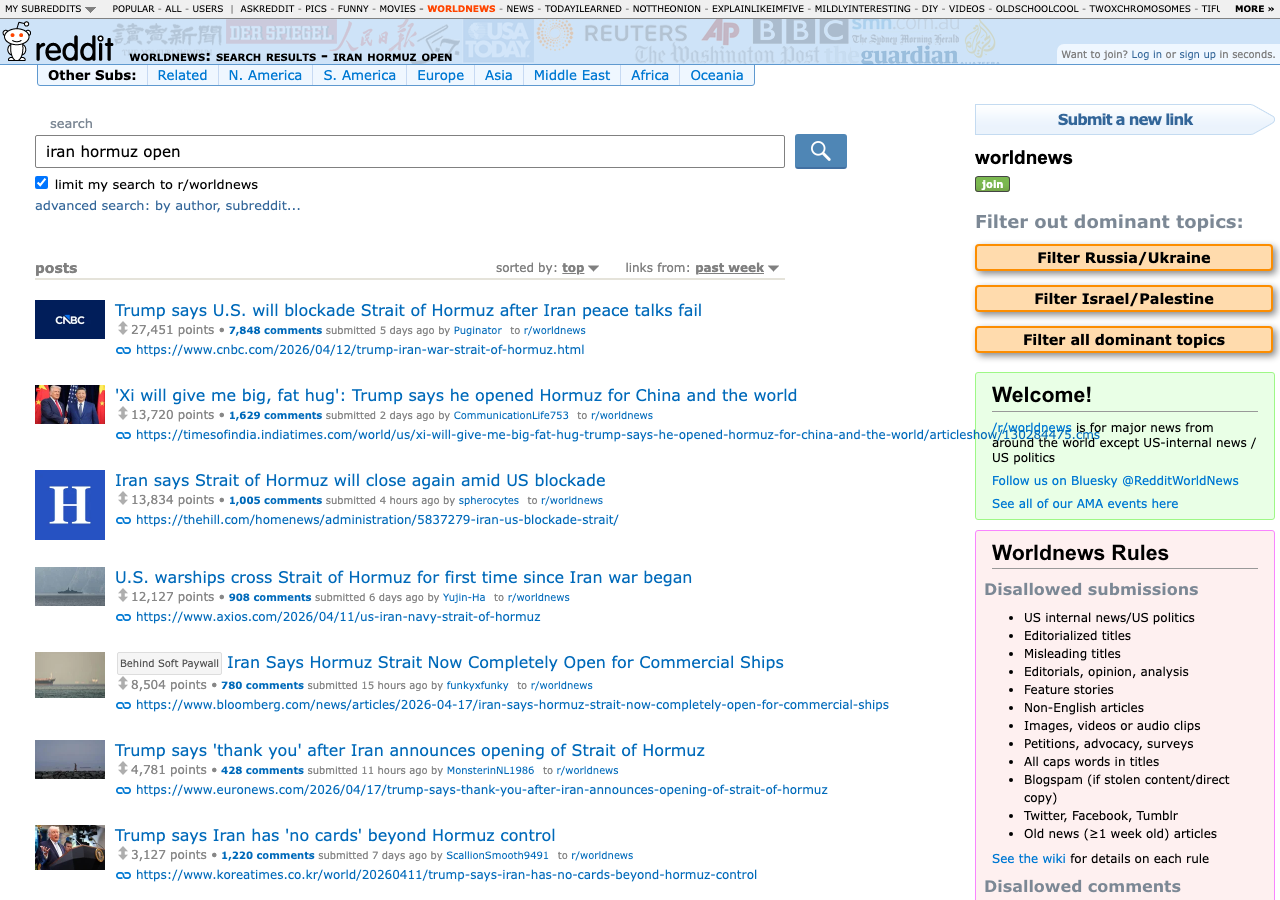
Right now, the Polymarket crowd is at 63% on ceasefire extension and 95% on conflict ending by year-end. Those prices are probably right. But they are prices on process, not on outcome. A ceasefire that extends indefinitely while Iran's enrichment program advances is not a conflict that has ended. It is a conflict that has been reclassified.
Watch the Islamabad track — nuclear framework language reportedly being developed for the next round of talks. Watch for whether the April 22 joint statement, if there is one, contains the word "enrichment." Watch for IAEA Director-General statements in the next ten days. Those are the leading indicators that separate a real deal from a theatrical pause.
The Hormuz opening is not theater. But the coverage of it is.
The Arc of Power publishes three times weekly on the geopolitics of the AI and technology era. Previous coverage: The Xi Variable: How China Is Breaking Maximum Pressure · The Hormuz Blockade: UK Refuses, NATO Fractures · Iran-US Ceasefire: Built on Sand
The Desk
About The Arc of Power
The Arc of Power editorial desk delivers rigorous analysis of geopolitics, defense, economic statecraft, and intelligence — examining the forces that shape the global order.
Briefing Access
Request Briefing Access
In-depth geopolitical analysis — power dynamics, defense strategy, and economic statecraft — three times a week. No noise.
Request briefing access