Case file · Geopolitics · 10 min read
The Iran-US Ceasefire Is Built on Sand. Here's Who Benefits.
A 2-week truce, incompatible demands, and three players who walked away stronger than they entered. The ceasefire isn't peace — it's a repositioning.
The Arc of Power ·
The United States and Iran agreed to a two-week ceasefire on April 8, 2026 — halting 40 days of US-Israeli strikes that killed Iran's supreme leader, cratered global oil markets, and exposed the structural limits of American military power in the Persian Gulf.
Our thesis: This ceasefire is not a path to peace. It is a repositioning. Every major actor — Washington, Tehran, and Islamabad — is using the pause to consolidate gains that the fighting itself could not deliver. The ceasefire's value is not in what it resolves (nothing) but in what it reveals about who now holds leverage and who has lost it.
The CSIS assessment calls it "fragile." That understates the problem. This ceasefire is structurally incoherent — the two sides accepted it while holding incompatible frameworks for what comes next. The Persian-language version of Iran's ten-point plan includes a phrase stipulating continued uranium enrichment on Iranian soil. That phrase does not appear in the English-language version. The two sides may not be negotiating from the same text.
The Enrichment Deadlock: Neither Side Can Move
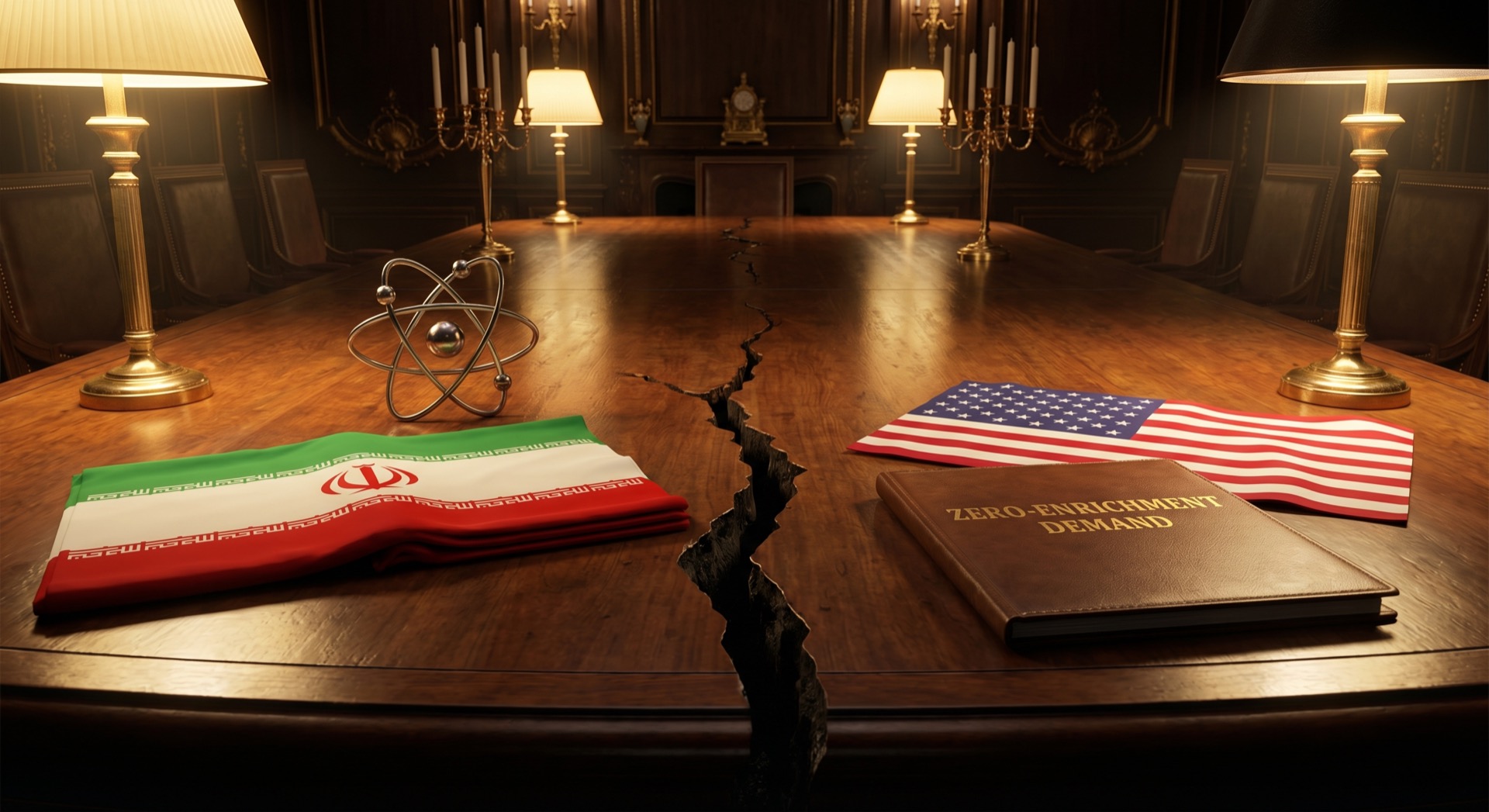
Strip away the diplomatic language and the structural problem is simple: Washington demands zero uranium enrichment. Tehran's ten-point proposal treats enrichment as a non-negotiable sovereign right. One of these positions has to move. Neither will.
Here is why.
For the Trump administration, "zero enrichment" is not a negotiating position — it is a commitment made to Netanyahu. Israel has been assured by the US that enriched uranium will be removed from Iran "whether through negotiations or by force." Walking that back means breaking a promise to Israel during an election-adjacent period. The domestic political cost is prohibitive.
For Tehran, enrichment is the one card that makes Iran a nuclear-threshold state rather than a conventional military power that just lost its supreme leader. Surrendering enrichment means surrendering the only deterrent that prevented the US from pursuing regime change. The IRGC learned from Libya and Iraq: states that abandon nuclear ambitions get invaded. States that retain them get negotiated with.
This is not a negotiation where creative diplomacy can find a middle ground. It is a zero-sum contest over whether Iran remains a nuclear-threshold state. The ceasefire is buying time for both sides to prepare for the next phase — not to resolve the underlying conflict.
The Economist's analysis of what both sides actually want from negotiations is the sharpest framing available:
The Strait of Hormuz: Where Power Actually Lives
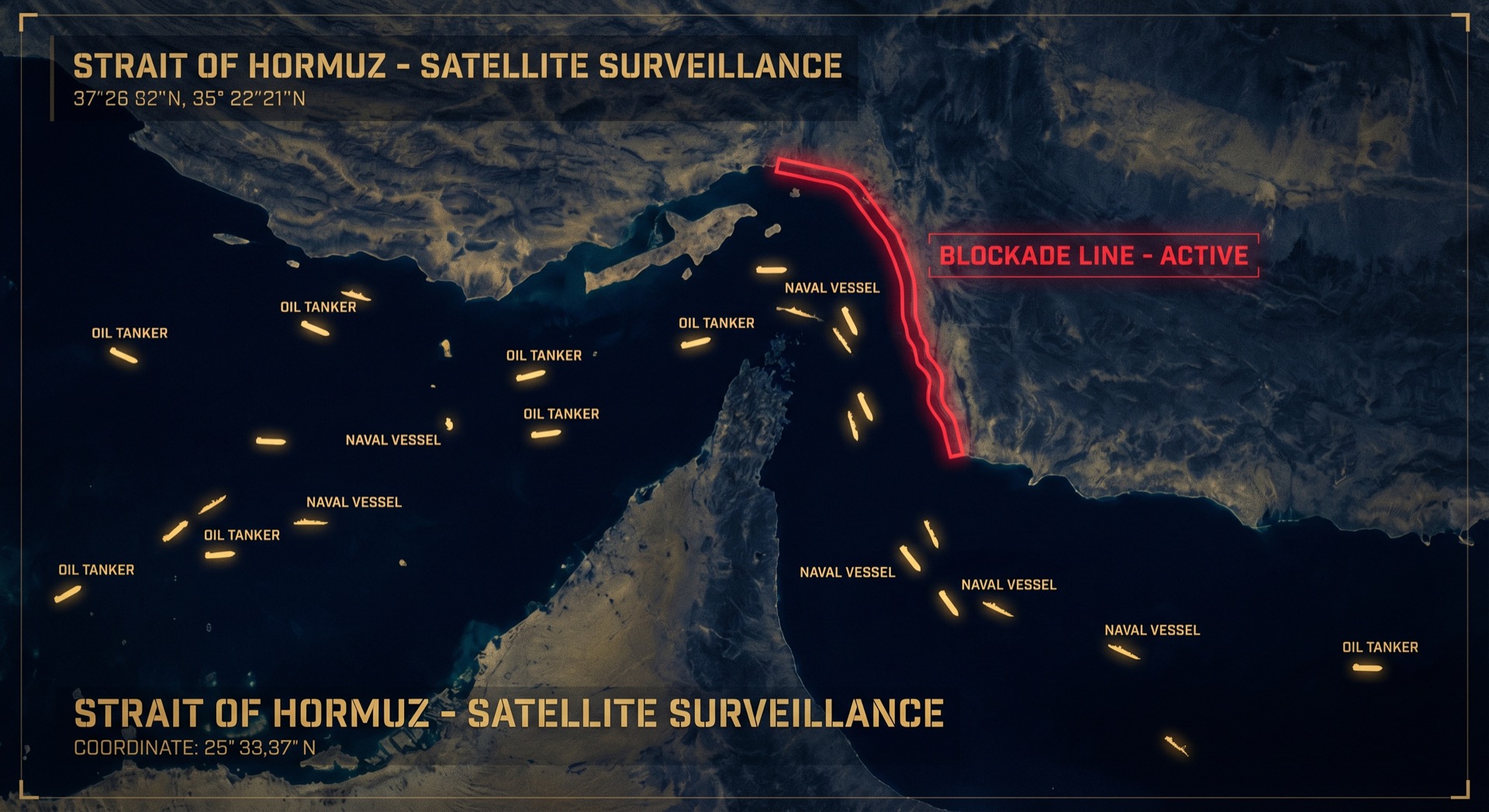
The Iran war's most consequential development is not the ceasefire itself. It is what Iran demonstrated about the Strait of Hormuz.
When Iran effectively blocked shipping traffic through the Strait after February 28, Brent crude spiked to $113. March US inflation hit 3.3%, driven almost entirely by the energy shock. Iowa farmers took a double hit — Iran war oil prices plus tariffs simultaneously.
Trump warned Iran it "better not" collect tolls on Strait traffic. The UK rejected Iran's cryptocurrency toll proposal. But the underlying reality is that Iran proved it can weaponize Hormuz — and the global economy has no fast alternative. Roughly 20% of the world's oil and natural gas normally transits the Strait.
The ceasefire brought oil prices down 13-16% in a single session. That relief is itself a form of leverage: Iran can crash markets by resuming Hormuz disruptions at any time. The threat does not need to be exercised to be effective.
Critical
The contrarian read nobody wants to hear: University of Chicago professor Robert Pape argues the war is turning Iran into a major world power, not weakening it. The IRGC absorbed US-Israeli strikes and emerged with enhanced regional leverage. Gulf states are now openly questioning whether US security guarantees mean anything. If Pape is right, the US achieved the opposite of its stated objectives — it validated Iran's deterrence model and undermined its own alliance structure in the Gulf.
Pape's full argument — and why it matters more than the official narrative:
Pakistan: The War's Quiet Winner
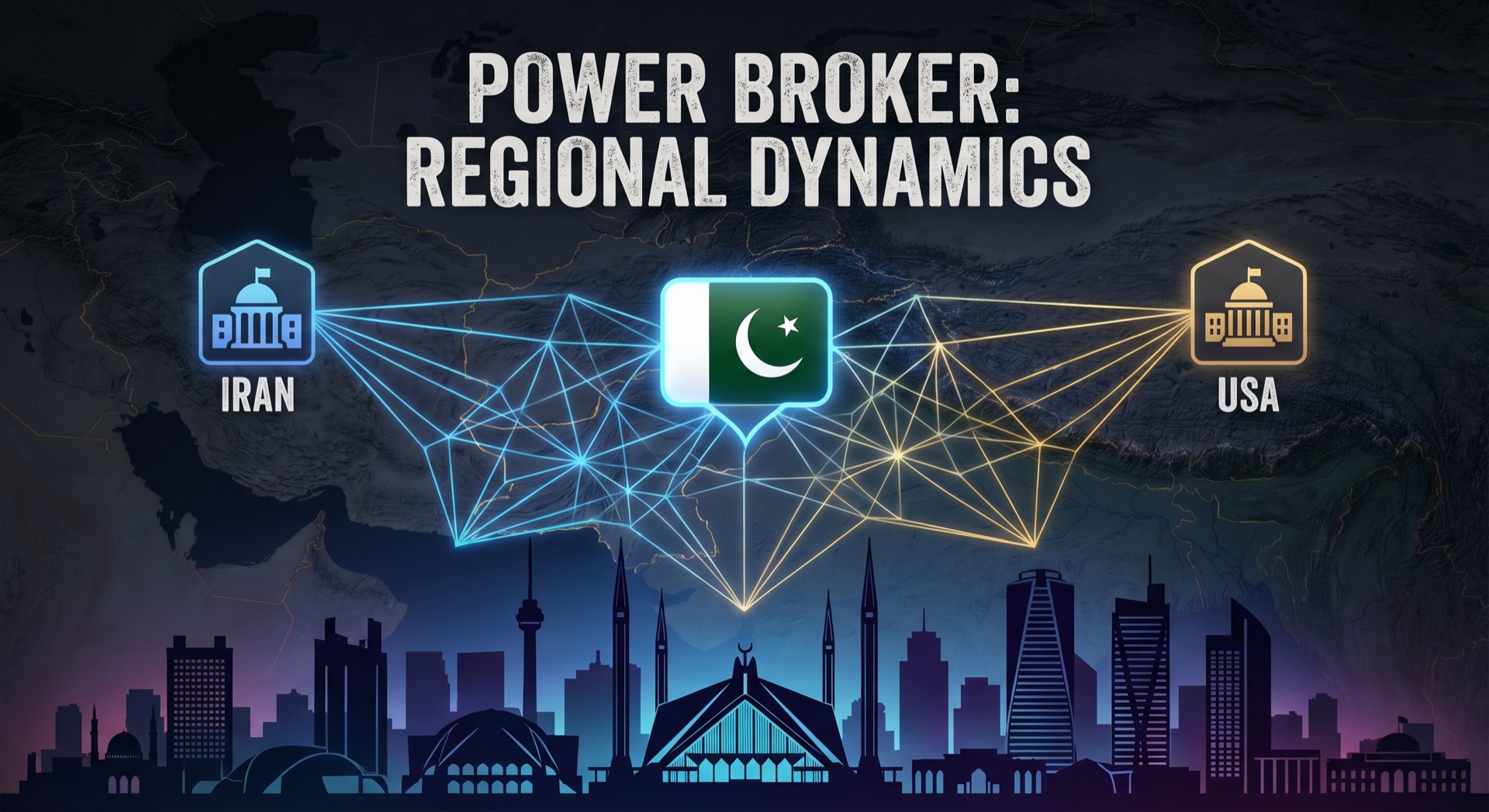
The most underreported story of this conflict is Pakistan's emergence as power broker.
Islamabad was not at the table for the 2015 Iran nuclear deal. It was not part of the Abraham Accords. It has now positioned itself at the center of the most significant US-Middle East diplomatic engagement since the 2003 Iraq invasion. VP Vance, Witkoff, and Kushner are in Islamabad. Tehran sent a 70-person delegation led by the Parliament Speaker.
The Guardian's coverage of how Pakistan pulled this off is essential context:
This is a significant strategic win for Pakistan — and it was not accidental. Islamabad leveraged three assets simultaneously: its geography (bordering Iran), its existing relationship with Tehran via the Gulf states, and its US security partnership. Pakistan's goal for the summit is deliberately modest: a deal to keep talks going. That modesty is the strategy — as long as talks continue in Islamabad, Pakistan remains the indispensable intermediary.
The historical parallel is instructive. Norway's role in the 1993 Oslo Accords transformed a small Nordic country into a permanent fixture of Middle East diplomacy. Pakistan is making the same play, with better cards.
The MAGA Coalition Fracture
The domestic fallout is as consequential as the geopolitics. Trump's right-wing media coalition publicly fractured over the Iran war. Tucker Carlson, Megyn Kelly, Candace Owens, and Alex Jones all criticized Trump's handling of the conflict. Fox News anchors stated on air that Trump's objectives "have not been achieved."
This fracture reveals something structural: the MAGA coalition was never unified on military interventionism. It was held together by cultural grievance, not foreign policy consensus. The Iran war exposed the fault line. Trump ran on cheap energy; his administration started a war that caused the largest oil price spike in years. The hypocrisy trap — Republicans downplaying gas prices after blaming Biden for years — is now fully sprung.
Democrats filed impeachment articles this week, using war powers as the primary vehicle. Whether impeachment goes anywhere is a separate question. The filing itself is a marker of where the political opposition has consolidated.
The Lebanon Problem the Ceasefire Cannot Solve
While the US-Iran ceasefire was being celebrated, Israel launched its largest single-day attack of the war against Hezbollah — 100+ airstrikes in 10 minutes, killing 250+ people. Lebanon's single-day death toll topped 300.
This exposes the ceasefire's structural incoherence. Iran cannot sell a peace deal domestically that leaves Hezbollah getting bombed. Israel cannot stop Lebanon operations without a separate agreement. The US is reportedly planning separate US-Israel-Lebanon talks — tacitly admitting the Iran ceasefire does not cover the Lebanese front.
The ceasefire is not one conflict paused. It is one of several overlapping conflicts temporarily quieted while the others continue at full intensity.
The Arc of Power Analysis: Three Lessons This Ceasefire Teaches
Most commentary on this ceasefire focuses on whether it will hold. That is the wrong question. The right question is what power dynamics it has already permanently altered, regardless of what happens on April 22.
Lesson 1: Deterrence by disruption has replaced deterrence by destruction. Iran did not need to sink a carrier or kill thousands of American troops to achieve its strategic objectives. It needed to close Hormuz, crash oil markets, and spike US inflation to 3.3%. The IRGC discovered that a $50 million naval mining operation inflicts more strategic damage than a $50 billion missile program. This is a paradigm shift. Every mid-sized power with access to a chokepoint — Turkey (Bosphorus), Egypt (Suez), Malaysia (Malacca) — just received a masterclass in asymmetric leverage. The era of "kinetic deterrence is the only deterrence" is over.
Lesson 2: The US alliance architecture in the Gulf is a paper tiger — and now everyone knows it. Gulf states watched the United States fail to reopen Hormuz for 40 days. They watched oil prices double. They watched Washington eventually negotiate rather than enforce. The implicit promise that undergirds every US base in the Gulf — "we will keep the shipping lanes open" — was stress-tested and failed. The Saudis, Emiratis, and Qataris will not publicly say this. They will quietly begin hedging — building relationships with Beijing, diversifying energy customers, investing in non-US security partnerships. That hedging has already begun, and it will not reverse even if the ceasefire holds.
Lesson 3: The real winner of this war is not at the negotiating table. China is not in Islamabad. It did not fire a missile or lose a soldier. But it gained more strategic advantage from this war than any participant. The US demonstrated it cannot manage a Middle East war, a NATO crisis, and domestic political cohesion simultaneously. The Economist already published the piece nobody wants to read: "What does the war in Iran mean for Taiwan?" Beijing's risk calculation on Taiwan just shifted — not because China became more aggressive, but because America demonstrated bandwidth limitations that are now part of the public record.
The ceasefire expires April 22. Polymarket prices resolution at 98%. We think that price is wrong. Not because the ceasefire will collapse — neither side wants to restart fighting — but because the market is conflating "ceasefire holds" with "conflict resolved." Those are entirely different outcomes. The ceasefire will extend. The enrichment deadlock will not break. And the structural damage to US credibility in the Gulf will compound with every month that Hormuz remains a demonstrated vulnerability.
Critical
Our prediction: The ceasefire will be extended — neither side wants to restart fighting — but no substantive agreement on enrichment will emerge from Islamabad. The conflict will freeze into a permanent low-grade standoff, with Iran retaining de facto nuclear-threshold status and the US unable to enforce its zero-enrichment demand. The Strait of Hormuz will remain Iran's primary leverage instrument for the next decade. The real question is not whether this ceasefire holds, but whether the US-Gulf security architecture survives the demonstration that American guarantees are conditional on American domestic politics.
Sources: Al Jazeera — Ceasefire Terms | CSIS — Fragile Ceasefire | Time — Iran's 10-Point Proposal | NPR — Islamabad Talks | CNBC — Oil Markets | CNBC — Hormuz Tolls | Al Jazeera — Pakistan Mediator | CNN — Live Updates | Washington Post — Hormuz
The Desk
About The Arc of Power
The Arc of Power editorial desk delivers rigorous analysis of geopolitics, defense, economic statecraft, and intelligence — examining the forces that shape the global order.
Briefing Access
Request Briefing Access
In-depth geopolitical analysis — power dynamics, defense strategy, and economic statecraft — three times a week. No noise.
Request briefing access