Case file · Geopolitics · 8 min read
What the Iran Ceasefire Extension Is Really Hiding
Trump extended the Iran truce indefinitely at Pakistan's request. What the deal-making conceals about the nuclear stalemate and Iran's enrichment clock.
The Arc of Power ·
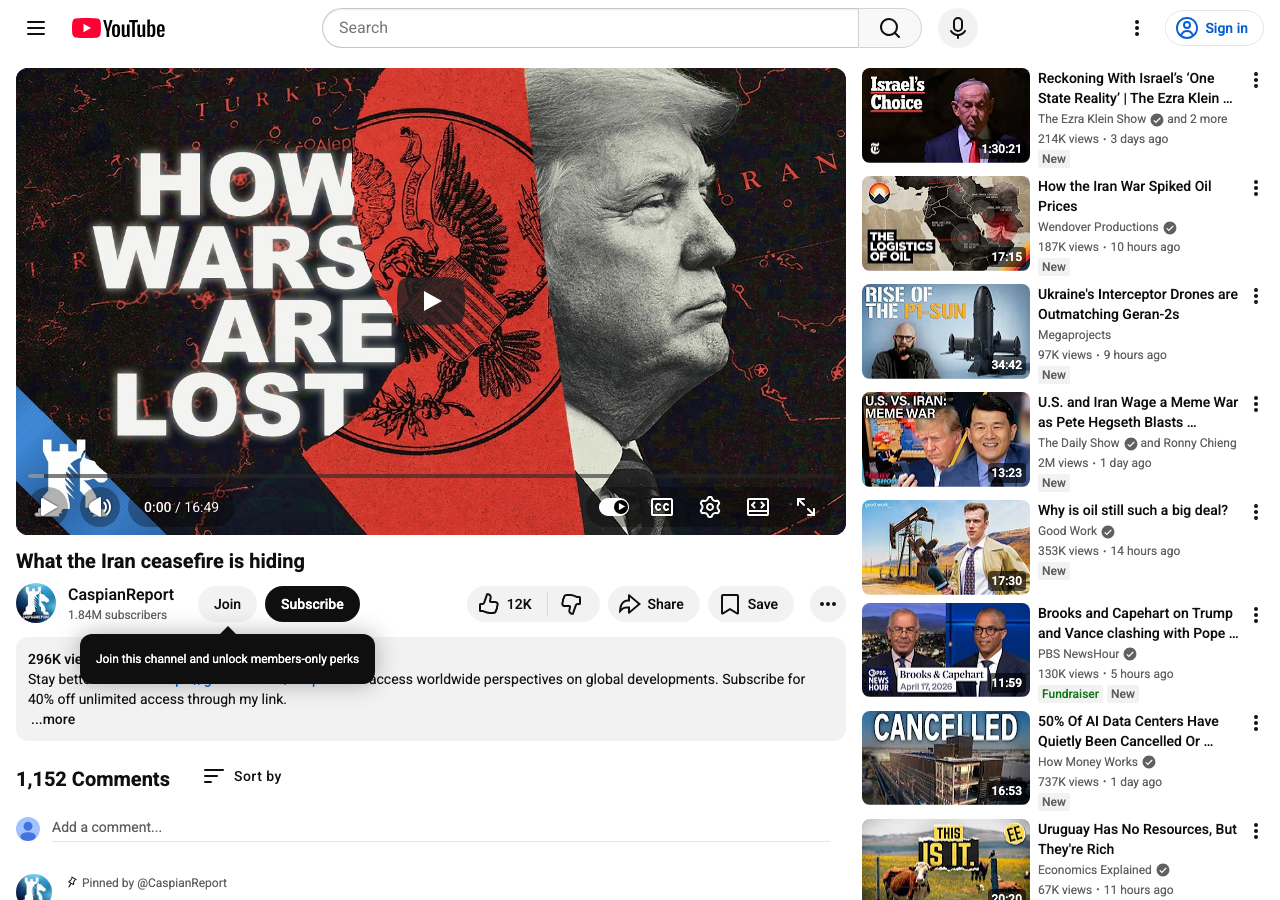
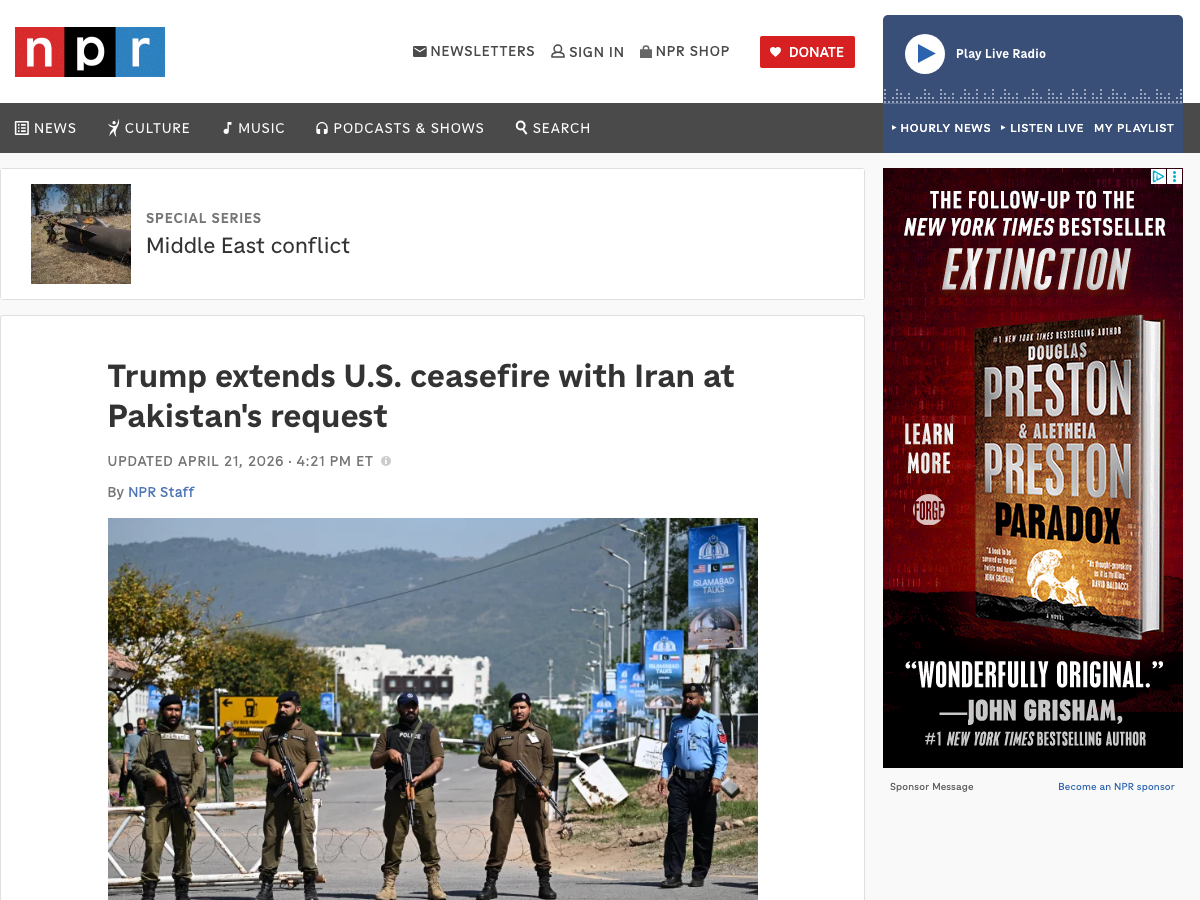
On April 21, Trump posted to Truth Social that he was extending the Iran ceasefire indefinitely — "until such time as their leaders and representatives can come up with a unified proposal." The announcement came hours after Iranian officials told Washington through Pakistani intermediaries that they would not appear for a second round of talks. VP Vance's planned trip to Islamabad was cancelled. The ceasefire that was supposed to expire April 22 is now open-ended.
The headline is that Pakistan bought Iran more time. The story beneath that headline is what Caspian Report's latest analysis calls "what the ceasefire is hiding": the nuclear enrichment clock is still running, and neither side has moved an inch toward the only resolution that would actually matter.
What Trump Said — and What He Didn't
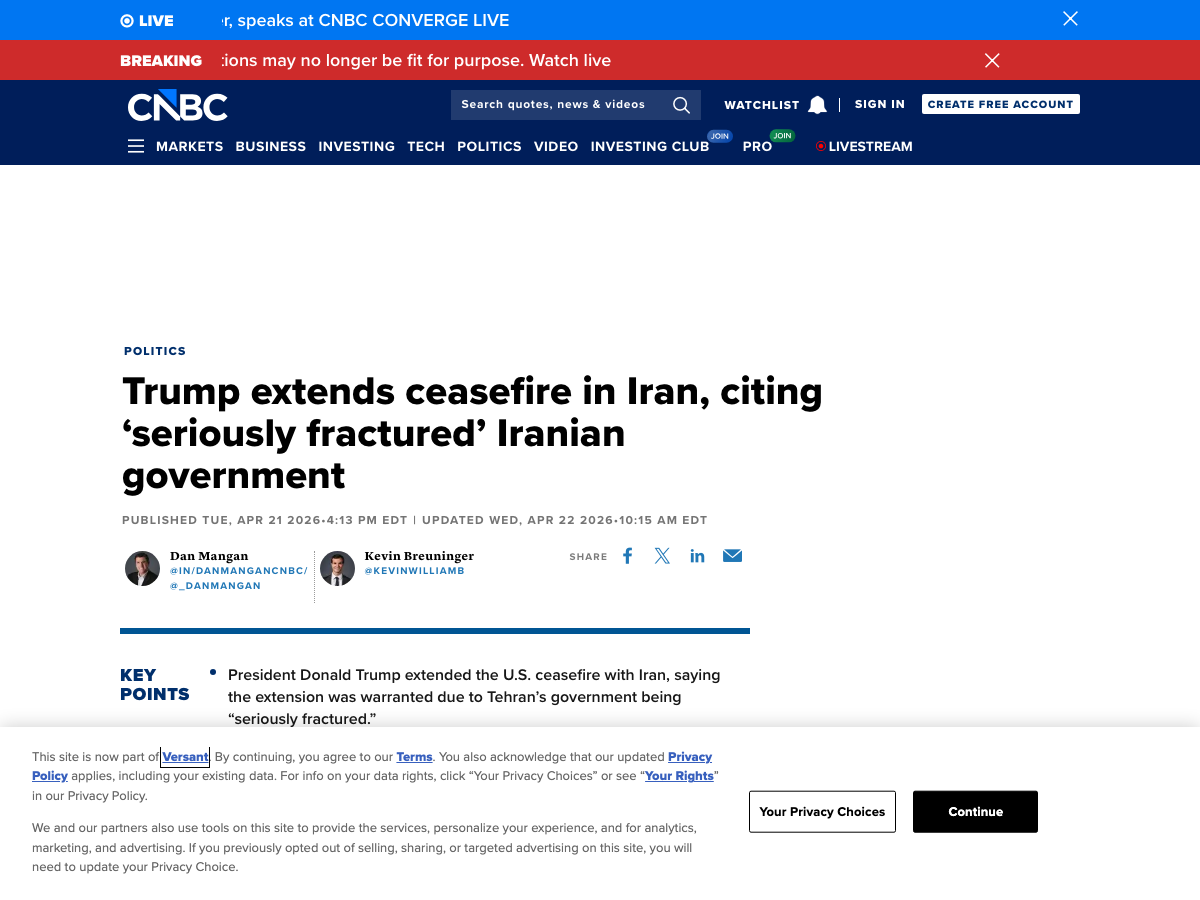
Trump's Truth Social post cited two things: Pakistan's request (Field Marshal Asim Munir and PM Shahbaz Sharif) and what he described as Iran's "seriously fractured" government. CNBC reported that the US would "continue the blockade of Iranian ports" throughout the extension.
Those two facts tell the story. The US naval blockade continues. No Iranian ports are open. Iran cannot access its oil export revenue. The ceasefire exists in the military dimension (no strikes) but not in the economic dimension (the blockade is a continuing act of economic coercion). When Iran says it will not negotiate "under threat and force," this is what they mean: the blockade is still force.
Iran's parliamentary advisor Mohammad Baqer Qalibaf's office called the extension "a ploy to buy time for a surprise strike." That reading may be wrong — but it reflects the structural dynamic: every day of ceasefire is a day Iran is denied revenue, and every day Iran is denied revenue is leverage the US retains to press concessions in negotiations it believes time favors.
The Nuclear Clock Caspian Report Is Watching
The Caspian Report video published this week on "what the ceasefire is hiding" focuses on the enrichment dimension — specifically, what has NOT been resolved in any ceasefire framework so far.
The critical fact: Iran terminated all IAEA access on February 28, 2026. Surveillance cameras have been disabled. Seals have been removed from all declared facilities. The IAEA cannot verify the extent of strike damage to Iranian nuclear sites, the status of enriched material stockpiles, or whether covert enrichment activities continue at undeclared locations.
As of April 20, IAEA Director General Grossi stated that Iran holds 440.9kg of 60%-enriched uranium. At 90% weapon grade, that represents enough material for approximately 10 nuclear weapons. Every day that IAEA access is denied is a day that number could be changing without any international visibility.
The Islamabad Talks — the one substantive negotiating session held so far, on April 11-12 — broke down specifically on enrichment timelines. The US proposed a 20-year suspension of enrichment. Iran countered with five years. Neither side moved from those positions in 21 hours of negotiations. The gap is not procedural — it is structural. Washington is demanding that Iran give up the deterrent that makes it a nuclear-threshold state. Tehran knows what happened to Libya and Iraq after they did so.
Critical
The enrichment blind spot: IAEA inspectors have had zero access to Iranian facilities since February 28. Any enrichment activity at covert sites is invisible to the international community. The ceasefire has no inspection protocol — if Iran is advancing toward weapons-grade enrichment during this pause, no one in the West currently has visibility to confirm or deny it.
Pakistan's Position Is More Interesting Than It Looks
Pakistan's role as mediator deserves more analysis than it typically receives. Pakistan is simultaneously a US strategic partner, a country with its own nuclear arsenal, and China's closest regional ally. It has diplomatic channels with Iran that Washington does not. It has institutional incentives to prevent nuclear proliferation in its neighborhood. And it has just engineered a ceasefire extension that benefits Tehran at least as much as Washington.
Why would Pakistan request a ceasefire extension that gives Iran more time? The most plausible reading: Islamabad is concerned about what happens if the talks collapse and the war resumes — specifically, that resumed US strikes on Iran could produce the nuclear breakout event that Pakistan's security establishment has been trying to prevent for years. A nuclear Iran, or a US-Iranian military exchange that destabilizes Pakistan's western border, are both worse for Islamabad than a stalled ceasefire.
This is not alignment with Tehran. It is Islamabad's rational calculation that keeping Iran in the diplomatic process is preferable to the alternatives — and that Pakistan's value to Washington as a mediator depends on Pakistan being able to deliver Iranian participation, which requires giving Tehran concessions.
What the Washington Post Revealed About the Stalemate
The Washington Post's reporting on the ceasefire extension highlighted the core impasse: Vance told reporters that Iran would not commit to "forgoing a nuclear weapon." Tehran insists it will not negotiate under the threat of the continuing naval blockade. Neither side has a path to the other's red line.
The US political position is locked. Trump committed to Netanyahu that enriched uranium would be removed from Iran "whether through negotiations or by force." The domestic political cost of backing off that commitment — during an election-adjacent period, with Netanyahu watching — is prohibitive. The US cannot accept Iranian enrichment at any timeline without a significant domestic political cost.
Iran's position is locked for the inverse reason. The IRGC watched Libya and Iraq. States that surrender nuclear ambitions get invaded. States that retain them — even under pressure — get negotiated with indefinitely. The lesson of this very war is that Iran withstood the US-Israeli strikes and emerged with its nuclear program intact and its enrichment infrastructure undestroyed at the key facilities. Surrendering enrichment now, after surviving the strikes, would be strategically inexplicable.
The Strategic Reading
The ceasefire extension is not progress. It is stasis with a new expiry date. The US is keeping the naval blockade active — economic coercion without military strikes. Iran is keeping the Strait of Hormuz nominally open while refusing to negotiate on the nuclear question. Pakistan is holding the diplomatic space open because the alternative is worse for everyone.
This arrangement is sustainable until it isn't. The US has given Iran "three to five days" to engage — a deadline that will likely slip like every other deadline in this conflict. Iran's government is — by Trump's own admission — "seriously fractured," which means whoever negotiates on Iran's behalf may not be able to deliver the IRGC's compliance with any agreement reached.
Consider what "seriously fractured" means in practice. The IRGC controls Iran's nuclear infrastructure. The Iranian presidency controls diplomacy. The Supreme Leader's office sets red lines. These are not unified institutions with a single decision chain. A negotiated agreement reached by Iranian diplomats in Islamabad means nothing if the IRGC's enrichment operations in Natanz continue regardless. When Trump says he is waiting for Iran to "come up with a unified proposal," he is describing a structural problem inside the Iranian system that a ceasefire extension does not resolve.
The Axios report on a proposed $20 billion cash-for-uranium deal — Washington offering to pay Iran for its enriched stockpile as a compromise — is the clearest indicator of how far apart the two sides actually are. Iran rejected it. The IRGC's calculation is not financial: they do not want the enriched uranium sold to the US; they want it retained as insurance. No dollar figure changes that calculation.
What the ceasefire is hiding, as Caspian Report correctly identifies, is the gap between the surface-level diplomatic activity and the structural nuclear calculus that has not shifted one degree since February 28. The enrichment clock does not care about ceasefire extensions. And no one in Washington currently has visibility into what it is doing.
The ceasefire extension bought time for diplomacy. It bought the same amount of time for Iran's enrichment program. Which of those two clocks matters more is the question nobody in the current framework is authorized to answer.
Sources: Caspian Report — What the Iran Ceasefire Is Hiding · CNBC — Trump extends ceasefire · Washington Post — Talks stalemate · Euronews — Pakistan request · CBS News — Ceasefire uncertainty · Al Jazeera — Enrichment explainer · Wikipedia — 2026 Iran war ceasefire
The Desk
About The Arc of Power
The Arc of Power editorial desk delivers rigorous analysis of geopolitics, defense, economic statecraft, and intelligence — examining the forces that shape the global order.
Briefing Access
Request Briefing Access
In-depth geopolitical analysis — power dynamics, defense strategy, and economic statecraft — three times a week. No noise.
Request briefing access