Case file · Geopolitics · 11 min read
The Hormuz Blockade: UK Refuses, NATO Fractures
The US blockaded the Strait of Hormuz — 20% of global oil. UK refused to join. Robert Pape: NATO is 'for all practical purposes, dead.'
The Arc of Power ·
The United States Navy began enforcing a blockade of all maritime traffic entering and exiting Iranian ports in the Strait of Hormuz on Monday, April 13 — the day after peace talks in Islamabad collapsed without agreement. West Texas Intermediate crude immediately jumped 7.8% to $104 a barrel, more than 50% above pre-war levels. Roughly 20 million barrels of oil transit the Strait every day. That's approximately 20% of global seaborne supply.
Within hours of the announcement, British Prime Minister Keir Starmer made a statement that may matter more than the blockade itself: the UK would not participate. France, Spain, and Turkey followed. Trump claimed British support; Starmer's office immediately contradicted him. France's Macron announced a parallel multinational mission — "strictly defensive, separate from the warring parties" — that explicitly sidesteps the US operation.
Our thesis: The blockade is significant. The refusal is historic. The combination tells you something about the post-American order that no single event could.
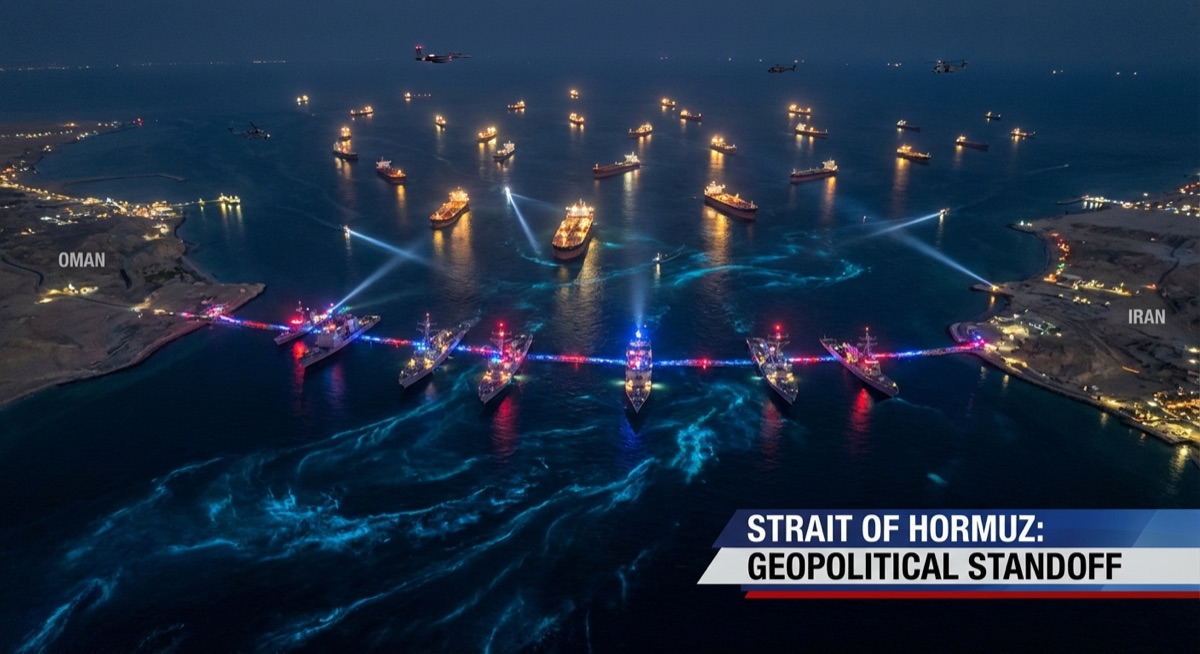
The Energy Shock Is Not a Price Spike — It's a Structural Shift
Every prior Hormuz disruption threat resolved quickly because both sides had incentives to keep traffic flowing. That calculus has changed.
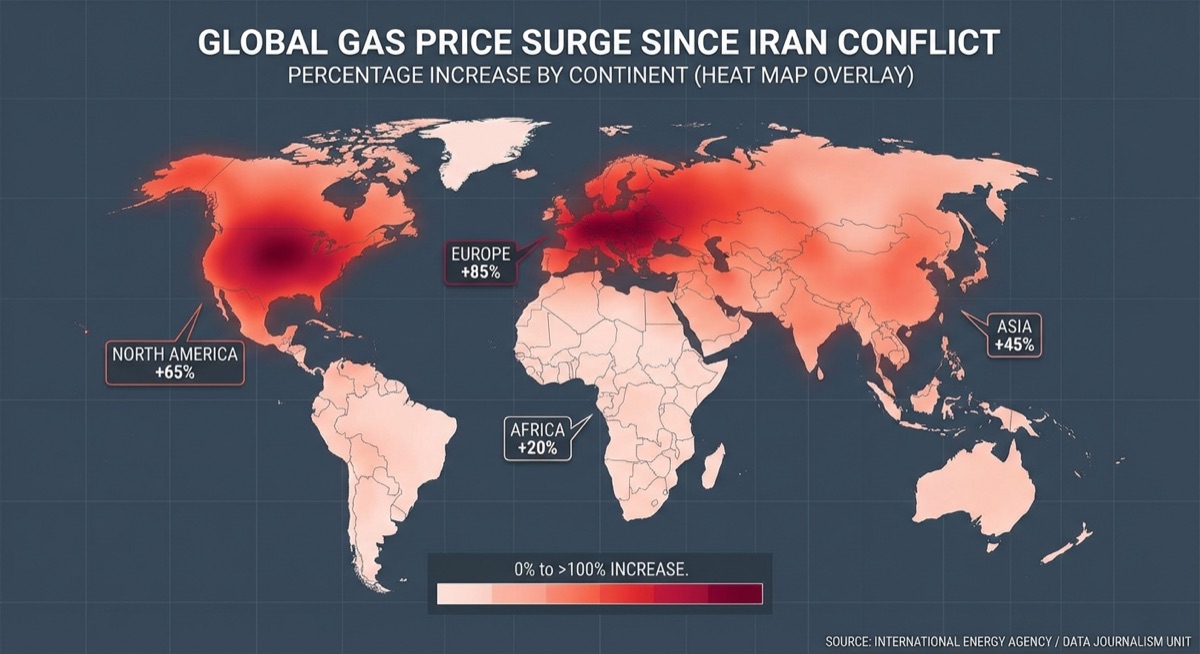
WTI crude is at $104. Brent crude hit $102 — a 40% increase since the war began. But the raw price number understates the structural problem. When the Strait first came under threat in March, Brent briefly surged past $120, the International Energy Agency's Fatih Birol called it the worst energy shock the world has ever seen — worse than the 1970s oil crises, worse than the Ukraine war combined.
The blockade has several overlapping consequences that compound each other:
Direct supply disruption. Kuwait, Iraq, Saudi Arabia, and the UAE collectively lost 10+ million barrels per day of export capacity by mid-March. These countries rely on the Strait for the bulk of their export routes. There is no fast alternative path that can absorb this volume.
Food supply crisis in the Gulf. This is the dimension most Western analysis is missing: Gulf states import over 80% of their caloric intake through the Strait. By mid-March, 70% of the region's food imports were disrupted. A blockade that squeezes oil is also squeezing food — in a region with no domestic agricultural capacity. The political implications are severe.
Transmission to US consumers. Gas prices hit $4 per gallon on March 31 — a 30% surge attributable almost entirely to the war. March US CPI ran at 3.3%, driven by energy. The inflation transmission has already happened; it will get worse if the blockade holds.
The UK Refusal: What It Actually Means
The headline number from Reddit is telling: the UK refusal thread (13,231 upvotes, 493 comments) nearly doubles the blockade announcement thread (7,320 upvotes). The public intuited before analysts articulated it: the more significant event is not that the US acted, but that the UK refused.
The last comparable rupture in the "special relationship" was the 2003 Iraq War, when France and Germany refused to back the US. The UK, notably, went along with Iraq. It is not going along this time.
The official UK position has three components: Britain opposes the blockade, will not contribute military assets, and is co-hosting a separate summit with France to organize a "strictly defensive mission to restore freedom of navigation" — which is structurally an alternative to the US operation, not a complement to it.
The significance: Starmer isn't just declining to participate in one operation. He's helping construct an alternative coalition structure that implicitly competes with US leadership of the Western security order. The UK-France maritime mission is not symbolic — it is a concrete institutional alternative to the US framework. That's different in kind from tactical disagreements.
Trump reportedly told journalists the UK was helping. Starmer's office immediately contradicted him, publicly. That's a diplomatic incident — not a managed disagreement. The relationship between Washington and London is not just "strained." It's adversarial on this specific question.
Robert Pape: "NATO Is, for All Practical Purposes, Dead"
The most analytically significant take on the current moment comes from University of Chicago professor Robert Pape — a military strategist who has spent 20 years wargaming an Iran conflict and has advised every White House since 2001. Pape appeared on The Diary of a CEO on April 13, the day the blockade went live.
His assessment: "NATO is, for all practical purposes, dead. Dead, we're just writing its obituary. It's a body in the morgue already."
And on Iran's strategic position: "Iran is far stronger than it was just 40 days ago. It is in control of 20% of the world's oil. It is now an emerging fourth center of power."
The phrase "fourth center of power" requires unpacking. Pape's framework identifies the existing three: the US, China, and Russia. Iran — which absorbed US-Israeli strikes, maintained its enrichment program, weaponized Hormuz, and emerged with enhanced regional leverage — has joined that tier. Not in absolute military capability, but in the ability to impose costs that the superpower tier cannot easily absorb.
His probability estimate for escalation: 75% chance the US moves to Stage 3 — ground forces. The mechanism: a blockade enforcement incident, an Iranian strike on US naval assets, or domestic pressure from rising gas prices creates an escalatory pretext.
Critical
The contrarian position worth taking seriously: Pape argues the Iran war has validated Iran's deterrence model. States that retain nuclear ambitions get negotiated with; states that surrender them get invaded (Libya, Iraq). The US campaign has demonstrated that the IRGC can absorb air strikes, maintain internal control, and escalate the energy cost globally. From Tehran's perspective, this is not a defeat — it is proof of concept.
Tehran Under Siege: The Internal Dimension
The external story (blockade, oil prices, allied fractures) is running in parallel with an internal story that receives less analysis but matters just as much for long-term outcomes.
Iran's nationwide internet blackout passed 1,000 hours on April 11 — making it one of the longest nation-scale shutdowns ever measured. Possessing a Starlink terminal is now punishable by death. The regime is using military-grade jamming against satellite communications. The blackout is not a side effect of the conflict; it is an active component of regime survival strategy.
The physical picture is equally stark. According to footage amplified by @yoavgo on X, Tehran is now occupied by a visible IRGC presence: Toyota Hiluxes mounted with DShK 12.7mm heavy machine guns stationed in parks, schools, and mosques. Snipers on residential rooftops. Special units in strategic bottlenecks throughout the city. Independent observers have drawn explicit comparisons to ISIS control over Raqqa and Mosul — not in ideology, but in the street-level militarization signature.
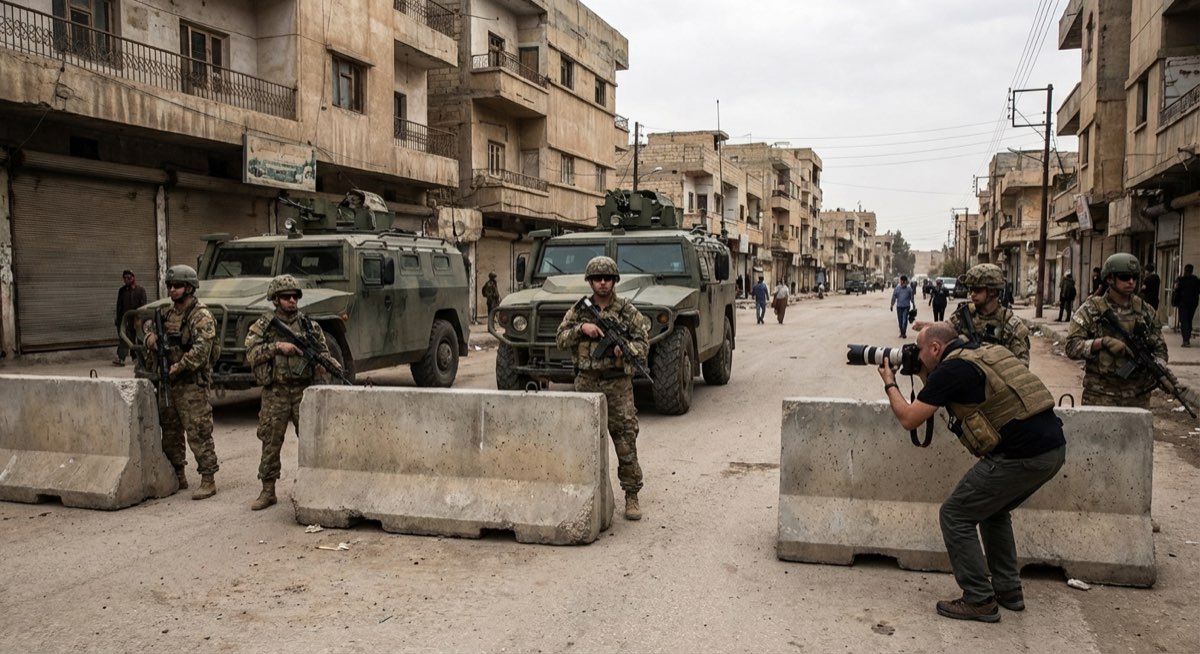
This dual signal — internet blackout + visible military occupation — suggests the regime is managing two threats simultaneously: the external military campaign, and internal population that has 40 days of knowledge about the scope of US strikes. The blackout is not just censorship; it's preventing coordination among a population that may not uniformly support continued resistance.
The Strategic Calculus by Actor
The United States
The US is in an escalation trap. The blockade creates leverage — Iran cannot export oil, China and India must choose between defying the US or paying more — but it also creates liability. Every day the blockade holds without a diplomatic resolution is a day US credibility is tested against the allied fracture. Trump claims allied support; allies are publicly contradicting him. The gap between stated and actual coalition support is visible and widening.
The deeper problem: the blockade's strategic logic requires Iran to capitulate (accepting zero enrichment) or escalate (providing a pretext for Stage 3 escalation). If Iran neither capitulates nor escalates — if it simply absorbs the blockade and waits — the US is in an extended standoff with rising domestic energy prices and a crumbling international coalition.
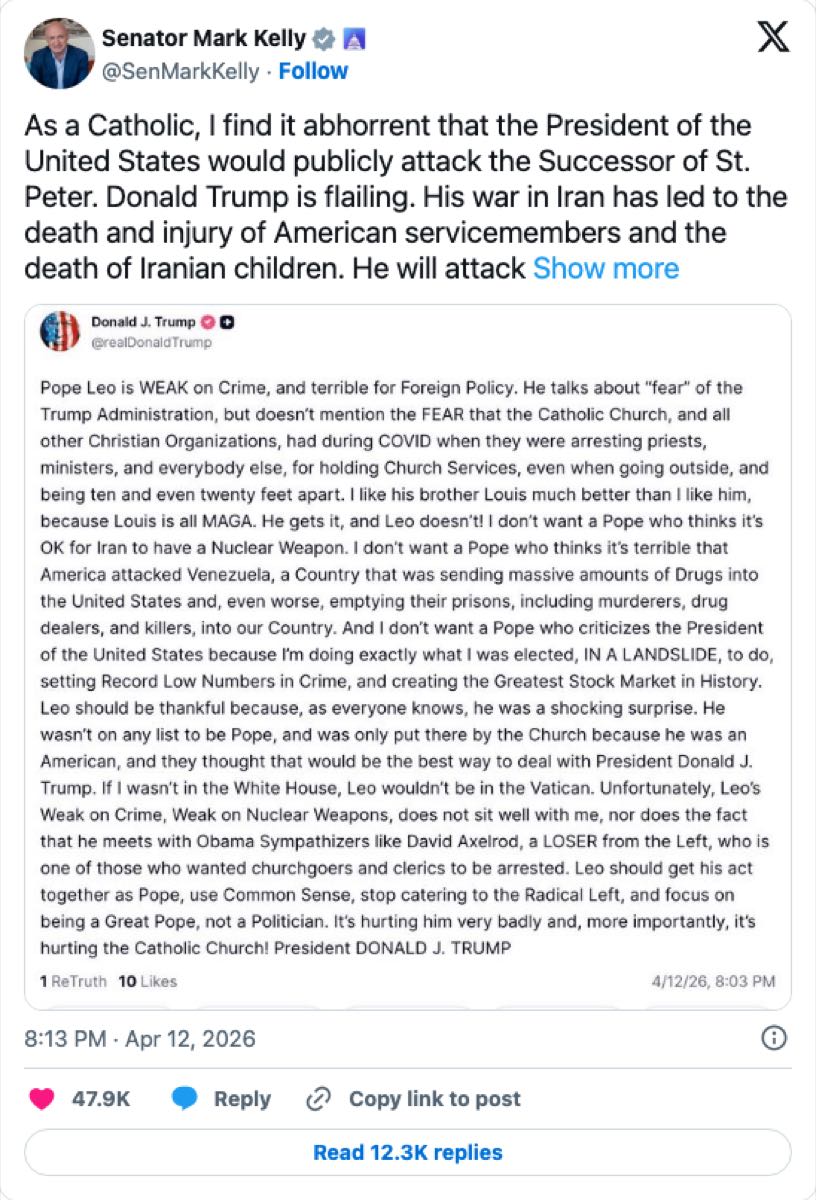
Senator Mark Kelly's statement — "Donald Trump's war in Iran has led to the death and injury of thousands of American troops" — frames the domestic political cost. A 50% oil price increase and soldier casualties are combustible politically. The administration needs a resolution before the political cost compounds.
The United Kingdom
Starmer's calculation: the UK-France joint mission gives Britain diplomatic cover (it's not supporting Iran, it's supporting freedom of navigation) while positioning London as a constructive alternative to Washington's unilateralism. This is strategically coherent if the goal is to preserve British influence in a post-unipolar order where neither pure American loyalty nor pure European alignment is viable.
The risk: if the US blockade works — if Iran capitulates or if Stage 3 achieves regime change — Britain will have been on the wrong side of the outcome and will have damaged the special relationship for nothing. Starmer is betting that the blockade won't deliver a clean US victory.
Iran
Iran has demonstrated the credibility of its Hormuz leverage. The blockade is a test of whether that leverage holds when the US actually enforces it versus when it merely threatens to. Iran's optimal outcome is a prolonged standoff: the longer the blockade holds without a diplomatic resolution, the higher the cost to US consumers and allies, and the more pressure builds for a negotiated settlement that preserves enrichment.
The internet blackout and IRGC street presence suggest the regime is managing internal pressure while holding the external line. Whether it can sustain both simultaneously is the central uncertainty.
China and India
The blockade's enforcement against Chinese and Indian vessels is the test that matters most. Both countries have been major buyers of Iranian oil throughout the war. If the US intercepts or diverts Chinese tankers, the crisis expands dramatically — a potential tripwire for direct US-China confrontation at sea. If China and India quietly comply, the blockade has real bite. If they don't, the US either backs down (undermining the blockade's credibility) or escalates to a different scale of conflict entirely.
The Energy Markets Implication for Tech
The convergence report's observation is worth stating directly: compute runs on power, and power prices are moving.
Data center energy costs are already the largest operational variable for AI infrastructure. A sustained $100+ oil price — maintained by a Hormuz blockade that has no clear diplomatic resolution path — transmits into electricity generation costs within 60-90 days. Natural gas prices are also moving, and natural gas is the marginal power source for much of US data center capacity.
The AI infrastructure buildout that every major tech company has committed to depends on projections about energy cost stability. Those projections were made before the world's most significant energy chokepoint came under military control of one of the belligerents. They may need to be revised.
What to Watch
The China-India test. Does the US actually intercept Chinese or Indian vessels? The first such incident will define whether the blockade is a gesture or a real enforcement mechanism — and whether the crisis expands to include additional great powers.
The UK-France summit. Macron announced a multinational conference "with the United Kingdom and those countries willing to join us." If it convenes with significant participation, it becomes an institutional alternative to US security leadership. That's not a temporary rift; it's a structural change.
Iran's Stage 3 trigger. Pape gives 75% odds on ground forces. The trigger is most likely an enforcement incident or a domestic US political break. Watch for both.
Energy price transmission. Current WTI at $104. If the blockade holds 30 more days without resolution, most analysts project $120+. At that level, the political cost to the administration becomes acute and the diplomatic pressure for any negotiated exit intensifies.
The blockade is live. The alliance is fracturing. The energy math is unforgiving. This is the stage where history tends to move faster than analysis.
Sources: CNBC Hormuz blockade coverage, Al Jazeera UK refusal, Robert Pape / Diary of a CEO, Wikipedia 2026 Strait of Hormuz crisis, Tom's Hardware Iran internet blackout, Foreign Policy blockade analysis, Democracy Now / Robert Pape
The Desk
About The Arc of Power
The Arc of Power editorial desk delivers rigorous analysis of geopolitics, defense, economic statecraft, and intelligence — examining the forces that shape the global order.
Briefing Access
Request Briefing Access
In-depth geopolitical analysis — power dynamics, defense strategy, and economic statecraft — three times a week. No noise.
Request briefing access