Case file · Geopolitics · 11 min read
The Ceasefire That Wasn't
The Iran-Israel ceasefire collapsed. Bloomberg says AI trades are unwinding. The de-escalation thesis we built our data-center repricing on just broke.
The Arc of Power ·
The Ceasefire That Wasn't: How the Iran-Israel War Just Unwound the AI Trade
Six weeks ago, this publication argued that Hormuz de-escalation was repricing energy and compute at the same time — that the same diplomatic momentum pushing Brent crude down was pushing Gulf data-center insurability up. Polymarket's peace-deal contract had surged on $4.4 million in single-day volume. Hyperscalers were accelerating Middle East region buildouts. The trade was clean and the consensus was simple: the Hormuz chokepoint was opening, and compute would follow energy downhill.
That thesis broke on Saturday.
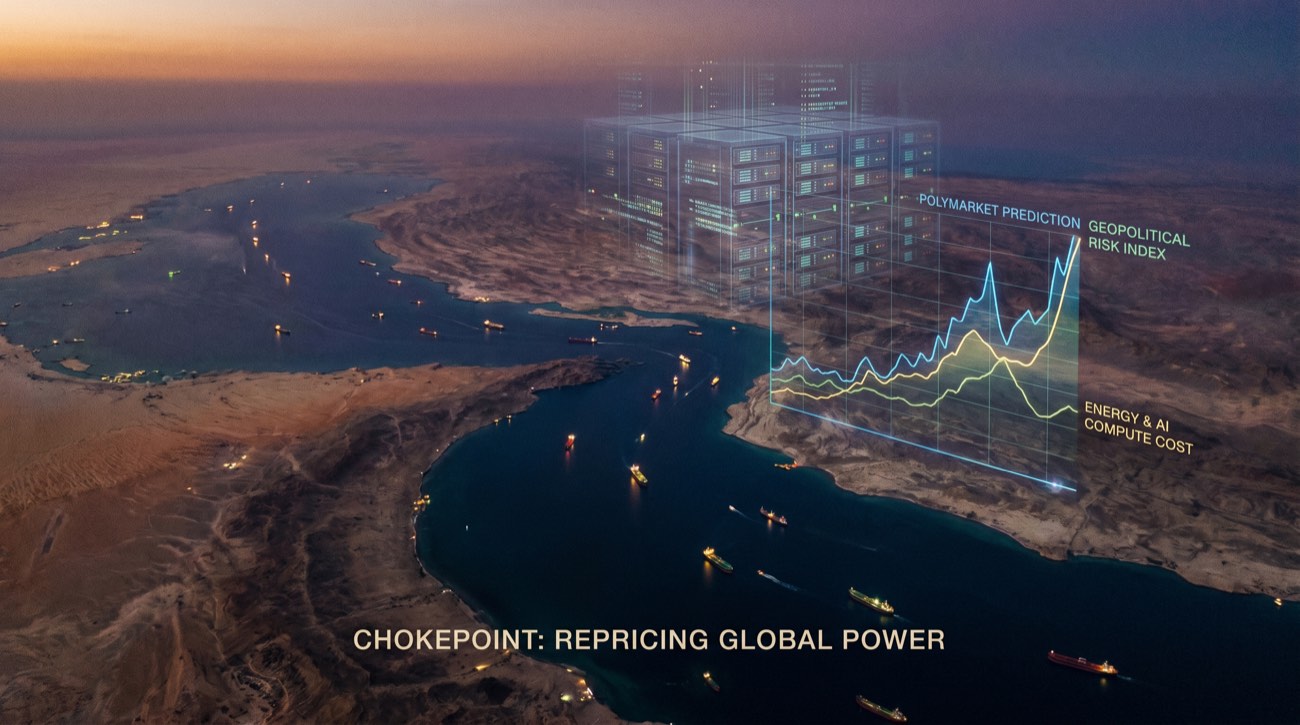
In the space of 48 hours, the ceasefire Trump took a victory lap on collapsed in a sequence that escalated faster than any diplomatic channel could absorb: Hezbollah rockets into northern Israel, an IDF strike on Beirut, Iran's Operation Nasr ballistic salvo — the first large-scale Iranian missile launch since spring — and Israeli retaliation across Tehran, Isfahan, and Tabriz. By Sunday morning, Houthi forces had reimposed their maritime blockade on the Red Sea and the approaches to the Strait of Hormuz. Commercial shipping lanes are, once again, effectively closed to unescorted traffic.
The missile exchange is the news. The second-order repricing is the story this piece is built to cover: Bloomberg ran "Stocks Tumble as AI Trades Unwind" within hours. Brent crude surged past $97 a barrel. And the Polymarket US-Iran peace-deal contract — the same instrument we have tracked through four prior analyses here — is down 28% this month, with $429.5 million in cumulative volume. The market isn't pricing the end of diplomacy. It's pricing something more precise: a brittle, short-leash pause that could snap again at any point. Ceasefire-extension odds are ticking up day-over-day even as the peace-deal contract craters — the market sees a tactical freeze, not a strategic resolution.
A geopolitical shock just did to the AI-infrastructure bull case what no skeptic's spreadsheet could: repriced it in real time, on camera, in 48 hours.
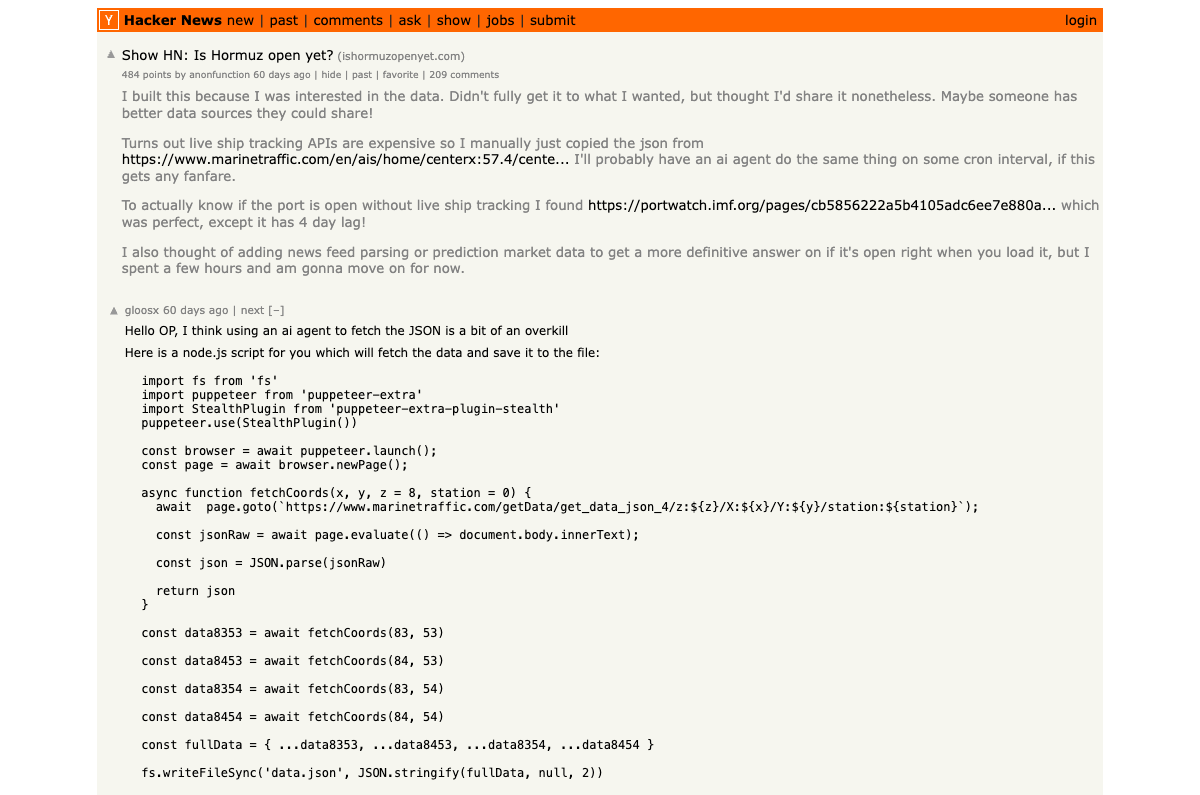
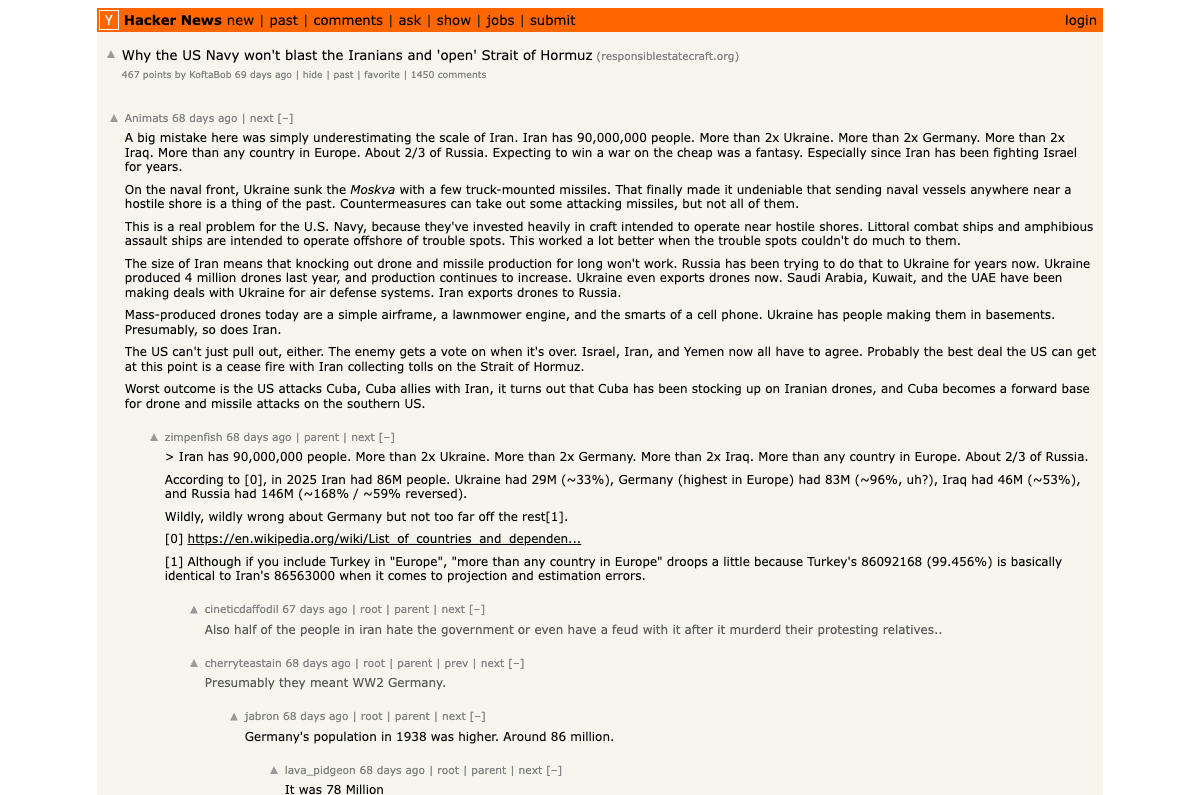
The Hacker News discussion of Bloomberg's "AI Trades Unwind" captured the developer community's reaction in real time — the top comment: "The same geographic concentration risk we warned about in cloud infra is now playing out in AI compute." CNN's Fareed Zakaria delivered the mainstream framing to 471K viewers: the Iran war isn't just an energy crisis, it's an AI infrastructure crisis.
Critical
This piece explicitly inverts a prior Arc thesis. Our May 1 analysis, Hormuz De-Escalation Reprices Energy and Compute Together, argued that de-escalation would simultaneously lower energy costs and increase Gulf data-center viability. The ceasefire collapse reverses both legs of that trade. What follows is the update.
The Chain Reaction: Missiles to Markets to Data Centers
The repricing has three links, and each one matters for a different constituency.
Link 1: Oil and Energy
Brent's surge past $97 is the immediate signal, but the structural damage runs deeper. Reuters reports that cumulative Hormuz disruptions have removed 13.5% of global oil supply between February and April 2026. The ceasefire had begun to unwind that damage — tanker insurance premiums were dropping, rerouting costs falling, and energy-intensive industries (including data centers) were projecting lower operating costs through the back half of the year.
That projection is now dead. The Houthi reimposition of the maritime blockade means the supply disruption restarts from a base that never fully recovered. Energy analysts are projecting Brent could test $110–115 if Hormuz remains contested for more than two weeks — a level that reprices the operating cost of every data center in the Gulf, every European fab dependent on Qatari LNG, and every hyperscaler expansion plan premised on cheap Middle Eastern power.
Link 2: The AI Infrastructure Unwind
Bloomberg's "AI Trades Unwind" headline captures a repricing that most AI-sector coverage hasn't internalized yet: the geographic concentration of AI compute infrastructure is now a priced geopolitical risk.
The Financial Times reports that AWS data centers in UAE and Bahrain sustained physical damage from Iranian drone strikes — the first confirmed hyperscaler infrastructure damage in the conflict. This is not a theoretical risk scenario or a tabletop exercise. It is physical kinetic damage to production cloud infrastructure in an active conflict zone.
The chain runs further. The Wall Street Journal reports that strikes near Qatar's Ras Laffan complex have disrupted helium logistics. Ras Laffan supplies approximately 30% of global helium used in semiconductor fabrication — the noble gas required for chip manufacturing processes. A sustained disruption doesn't affect the AI models; it affects the silicon they run on.
The OECD's June interim outlook delivered the institutional version of the same verdict: the assumption that Middle East de-escalation would underwrite Gulf AI compute clusters is "now directly challenged." This is the OECD formally noting what Polymarket priced in real time: the insurance model for Gulf data centers was built on a peace dividend that no longer exists.
Note
The geographic concentration risk we've tracked in this publication — hyperscalers betting on cheap Gulf energy without hedging the geopolitical premium — just moved from "structural risk" to "priced loss." AWS infrastructure damage in UAE/Bahrain is the first link. Helium disruption from Ras Laffan is the second. The insurance repricing is the third, and it hasn't finished moving.
Link 3: What Polymarket Is Pricing Now
The prediction markets tell a more nuanced story than the headlines suggest.
The US-Iran peace deal contract is down 28% this month on $7.2 million in volume — a decisive move by Polymarket standards, driven by the verified collapse of the ceasefire framework. This isn't noise trading; the volume is concentrated and directional.
But the ceasefire extension contract is doing something different: ticking up day-over-day, even as the peace-deal contract craters. The market's implied model is that a short-term tactical pause remains likely — neither side wants sustained full-spectrum conflict — but the diplomatic architecture that was supposed to convert pauses into permanent peace is broken.
For AI infrastructure, this is the worst possible pricing: not war, not peace, but an indefinite state of brittle pauses punctuated by escalation. You cannot underwrite a 20-year data-center lease on a 14-day ceasefire. You cannot amortize a $4 billion hyperscaler campus against a peace contract trading at 37 cents on the dollar.
The pattern we identified in the Polymarket insider-trading analysis — informed money moving ahead of public events — is visible again here. The peace-deal contract began its decline before the Hezbollah rockets. Someone was selling the ceasefire before it formally broke.
The Trump Variable
Trump's response has been characteristically maximalist: demanding an immediate return to negotiations, claiming "total victory" within two weeks, and calling for a ceasefire stop. CNBC reported his framing verbatim.
The problem is structural, not rhetorical. The prior ceasefire was Trump's diplomatic product — he took personal credit for it, tied it to his Iran-deal narrative, and used it as evidence that maximum pressure was working. Its collapse is a personal political cost in a way that a generic Middle East flare-up would not be. This creates an incentive to push for a rapid re-freeze (hence the ceasefire-extension contract ticking up) but does not address any of the underlying drivers that caused the collapse.
As we wrote in The Iran-US Ceasefire Built on Sand: the ceasefire's structural fragility was visible from the start. It depended on Hezbollah restraint that Iran couldn't guarantee, Houthi compliance that no one could enforce, and an Israeli government with no domestic incentive to de-escalate while security hawks control the coalition. Every one of those conditions failed simultaneously.
The Trump variable matters for AI infrastructure because it determines the timeline. A rapid re-freeze (Trump's preferred outcome) would stabilize energy prices and partially restore the insurance model for Gulf data centers — but it would not address the demonstrated vulnerability that AWS infrastructure can be hit by Iranian drones. A prolonged escalation (the market's base case, per the peace-deal contract) keeps Brent above $95, keeps Hormuz contested, and accelerates the repricing of every AI infrastructure bet premised on Gulf stability.
What This Means for the AI Infrastructure Thesis
The de-escalation thesis had three legs, and all three are now broken:
Leg 1: Cheap Gulf energy powers AI compute. Brent is back above $97. LNG supply from Qatar is disrupted. The energy-cost advantage that made UAE and Bahrain attractive for hyperscaler buildouts has narrowed or inverted — European energy prices are now competitive once you price in the geopolitical premium.
Leg 2: Gulf political stability enables long-horizon infrastructure investment. AWS infrastructure has been physically damaged. The 20-year planning horizon required for data-center economics does not survive a peace contract trading at 37 cents. Insurance premiums for Gulf compute clusters are repricing in real time.
Leg 3: Hormuz reopening restores global supply chains. Hormuz is re-contested. The Houthi blockade is reimposed. Semiconductor supply chains dependent on Qatari helium are disrupted again. The supply-chain normalization that AI infrastructure expansion assumed has not materialized.
The r/geopolitics thread on the ceasefire collapse surfaced the same structural critique within hours: "The insurance model was always built on vibes, not actuarial math." On X, infrastructure analysts flagged the AWS damage report as a watershed — the first time kinetic conflict has directly impacted hyperscaler production infrastructure.
None of this means the AI infrastructure trade is dead. It means the Gulf-specific version of that trade — the version premised on cheap energy, stable geopolitics, and open shipping lanes through the world's most contested chokepoint — has been repriced from "consensus long" to "priced risk." The capital doesn't disappear; it reroutes. Scandinavian data centers with renewable-energy contracts and no geopolitical exposure are the obvious beneficiaries. So are onshore US facilities, despite their higher energy costs.
Tip
The simplest way to read this: every AI infrastructure bet that required Hormuz to stay open and the Gulf to stay calm just got more expensive. The question isn't whether AI compute demand holds (it will). The question is where the compute goes when the cheapest location is also the most fragile.
The Bottom Line
The ceasefire that Trump claimed as a victory collapsed in 48 hours. Iran launched Operation Nasr. Israel struck three Iranian cities. Houthis reimposed the maritime blockade. Brent surged past $97. Bloomberg printed "AI Trades Unwind." Polymarket's peace-deal contract dropped 28% in a month.
The de-escalation thesis we built our data-center repricing analysis on is broken — not permanently, perhaps, but broken in a way that reprices the AI infrastructure trade from "geographic arbitrage" to "geopolitical risk premium." The structural fragility we identified weeks ago in the ceasefire's foundations has now manifested in kinetic terms.
The market's current read — a brittle pause, not peace — is the worst possible environment for long-horizon infrastructure planning. It's too unstable for 20-year leases, too calm for full evacuation, and too uncertain for insurance underwriters to price with confidence.
What comes next depends on the Trump variable: a rapid re-freeze stabilizes the trade temporarily but doesn't fix the demonstrated vulnerability. A prolonged escalation forces the compute-rerouting that the de-escalation thesis was supposed to prevent.
Either way, the trade has changed. The Hormuz chokepoint is no longer just an energy story. It's an AI story. And the ceasefire that was supposed to resolve it just became the ceasefire that wasn't.
Follow the discussion: Hacker News · Polymarket Iran Markets r/geopolitics · @ArcOfPower on X
The Desk
About The Arc of Power
The Arc of Power editorial desk delivers rigorous analysis of geopolitics, defense, economic statecraft, and intelligence — examining the forces that shape the global order.
Briefing Access
Request Briefing Access
In-depth geopolitical analysis — power dynamics, defense strategy, and economic statecraft — three times a week. No noise.
Request briefing access