Case file · Geopolitics · 12 min read
Chamath's 18 Months: Taiwan, TSMC-Arizona, and the Clock
Chamath says Taiwan stops mattering in 18 months. Polymarket prices invasion at 7%. The disagreement isn't about war — it's about the decoupling clock.
The Arc of Power ·
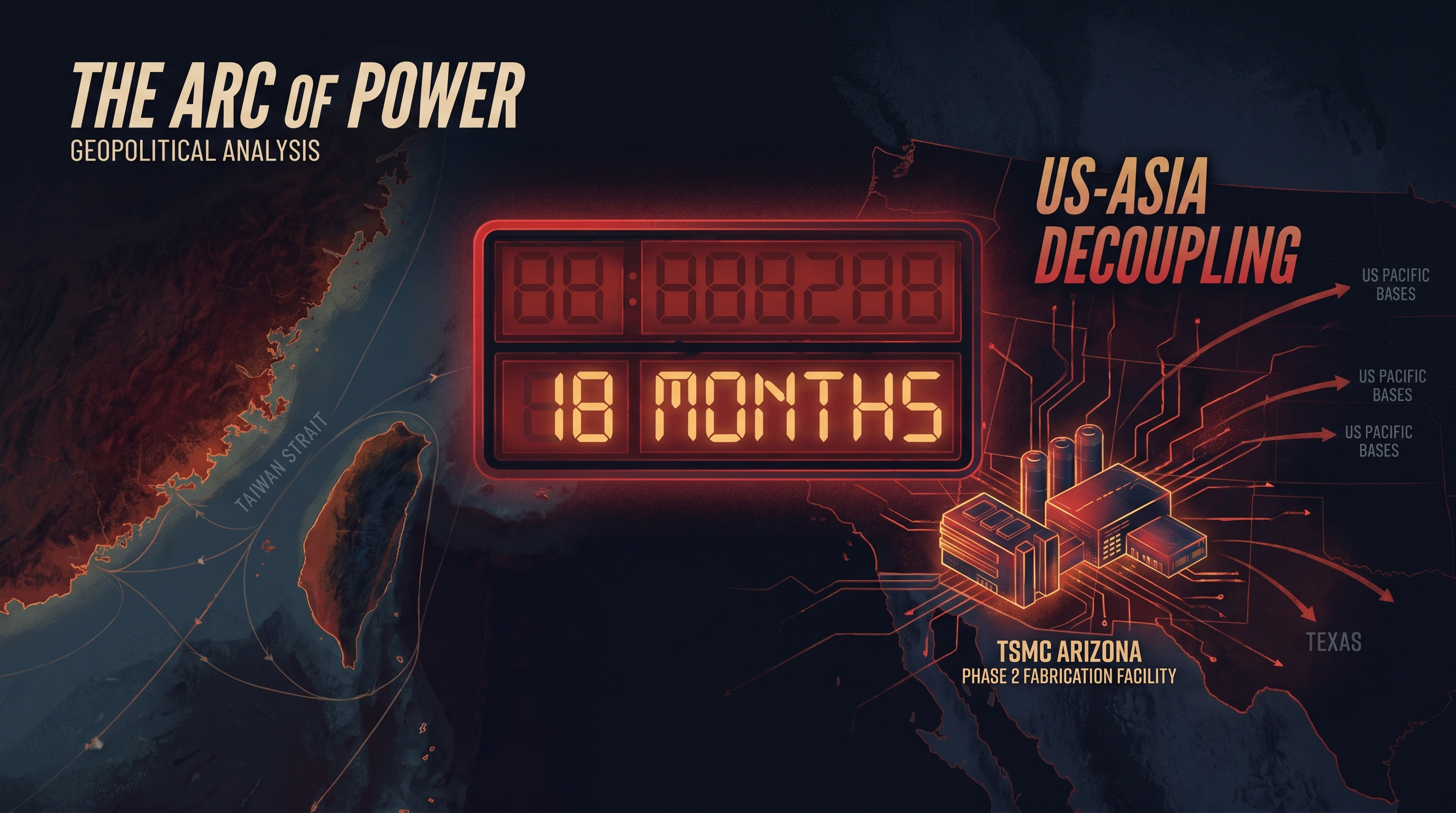
On the latest All-In Podcast, Chamath Palihapitiya delivered a single sentence that has been circulating across the political-class Twitter feed for forty-eight hours: "We're 18 months from Taiwan not being an important moment of conversation."
It is the most interesting thing said about Taiwan this week, and almost nobody is reading it correctly.
The dominant frame — picked up across PBS, The New York Times, Pakman, and The Guardian — has been about the Trump-Xi Beijing summit and whether Trump looked weak under Xi's Taiwan warning. That is the invasion frame. It assumes Taiwan matters because Beijing might one day move on it militarily.
Chamath's framing is different and more structurally interesting. He is not saying invasion risk drops in 18 months. He is saying Taiwan's structural relevance to the US is being engineered out of existence — through TSMC-Arizona Phase 2/3, domestic fab buildouts in Texas and Ohio, and the compute-substrate migration that's already moved Anthropic-grade workloads onto US-domiciled silicon. If he is right on the timeline, the policy regime shifts before the military regime even has to.
Polymarket, with $335,460 in 24-hour volume on the headline market, agrees on direction and disagrees on speed. The market prices a 2026 invasion at 7% and the end-of-June variant at 2%. Below that level of risk, the strait is not the binding constraint on US strategy — substrate migration is. Above it, the strait still matters. The 7% number is the test of Chamath's thesis, not a refutation of it.
This piece reads Chamath's quote in full context, walks the TSMC-Arizona evidence honestly, prices the Polymarket leg, identifies where the thesis breaks, and ends with the side story most political coverage missed: Elon Musk in the Great Hall of the People during the summit, and what that quietly says about how fast decoupling is actually moving.
1. What Chamath actually said — the full context
The 18-month line is being circulated as a clip. The clip strips the analytical move that makes the thesis interesting.
On the All-In episode, Chamath was responding to a question about US-China policy posture. His full argument has four parts, only one of which travels in the clip:
- TSMC-Arizona Phase 2 is on schedule for 2026-2027 production ramp, with Apple and NVIDIA having committed volume. This part is true and documented; we walk the evidence in §2.
- The compute substrate that matters most for US AI sovereignty is migrating to US-domiciled silicon faster than the policy debate. Cerebras, the Anthropic-SpaceX compute deal, and the inference inflection shift toward US-built inference fleets are the practitioner version of this claim.
- In 18 months, the marginal strategic asset Taiwan provides — leading-edge logic capacity for the US — will be available domestically with enough volume to take the strait off the critical-path list. This is the thesis — and it's the part operators should test.
- Therefore the diplomatic and military posture around Taiwan will change, because the asset being defended will have substantially decoupled from the geography being defended.
The clip travels because of part 4 — the rhetorical punchline. The analytical work is in parts 1-3. Chamath is making a claim about substrate migration timelines and using "18 months" as the inflection where TSMC-Arizona's contribution to US leading-edge logic capacity crosses a strategic threshold.
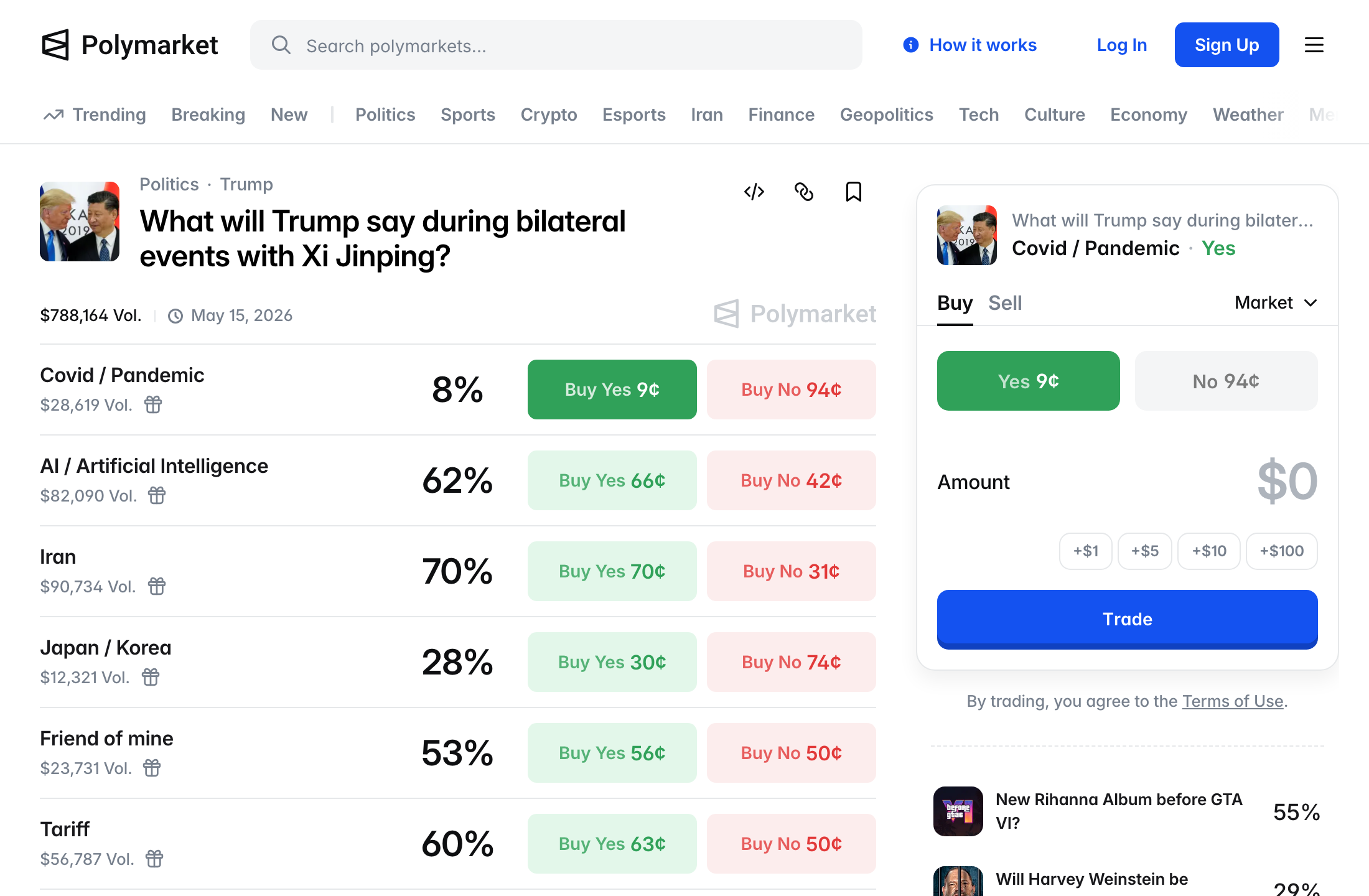
To evaluate the thesis honestly, we have to take part 1 — the TSMC-Arizona ramp — at face value or refute it. So that's where we start.
2. The TSMC-Arizona evidence — what's on schedule, what isn't
TSMC's Arizona Fab 21 project is the largest single foreign direct investment in US history at $65B committed across three phases. As of mid-2026:
- Phase 1 (4nm/5nm): Already in volume production since H2-2025. Apple A18 SoCs and AMD HPC chips shipping out of the Arizona facility in commercial volume. This is no longer projection; it's verified output.
- Phase 2 (3nm): Building completion mid-2026; tool-installation underway; first wafers projected H1-2027. Apple and NVIDIA have public volume commitments.
- Phase 3 (2nm): Site preparation underway; production target 2028.
Combine that with Intel's Ohio buildout, Samsung's Texas Taylor fab, and a re-shored packaging ecosystem (Amkor in Arizona, TSMC's own US ATP), and the picture sharpens. By H2-2027, the US has the option of leading-edge logic capacity in volume on US soil. Whether that fully replaces TSMC Taiwan for the most strategically sensitive workloads is a separate question — but the option exists, and the option is what Chamath's 18-month frame is pricing.
The honest counter-evidence:
- DRAM, mature nodes, and the supply-chain depth issue. Even with leading-edge logic re-shored, the broader semiconductor supply chain — substrate, photomasks, specialty chemicals, ATMI gases, the long tail — still runs through Taiwan-Japan-Korea. The headline-grabbing 2nm/3nm line ignores 60-70% of the semiconductor BOM.
- Volume vs. capability. Arizona's Phase 2 output will be a meaningful percentage of leading-edge logic, not all of it. Through 2027, the marginal datacenter buildout will still pull from Taiwan for some segment of need. The decoupling is partial, not total.
- Skilled-labor and equipment-vendor migration. ASML, Tokyo Electron, and Applied Materials' US service-engineer pipeline is not at parity with Hsinchu. Production yield in year-one US 3nm is going to be a real number.
The net read: Chamath is directionally right on the substrate migration. The 18-month timeline for "marginal-strategic-asset" substitution is defensible but tight. A 24-30 month variant is more honestly hedged. The thesis survives that adjustment — the dollar-volume threshold where Taiwan stops being the binding constraint is approached on either timeline.
3. The Polymarket leg — pricing the binding test
The cleanest market test of the Chamath thesis is Polymarket's "Will China invade Taiwan by end of 2026" market. $335,460 of 24-hour volume, $979,681 of liquidity. The market prices Yes at 7%, No at 93%, with the curve down 3.4% this month.
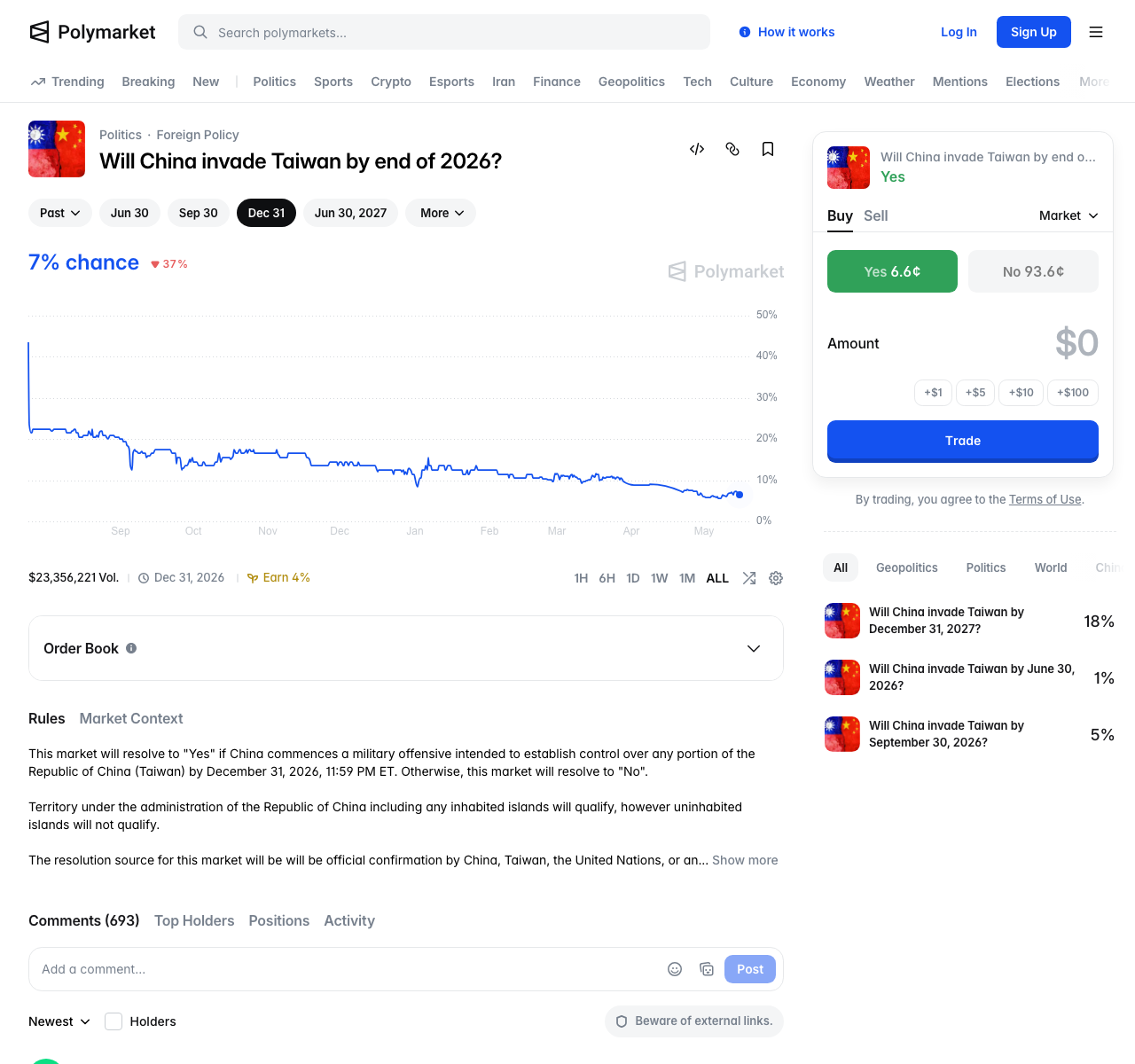
The shorter-horizon market — June 30, 2026 — prices Yes at 2% on $124,927 of 24-hour volume.
The 7% number is doing more work than most observers credit. Here is what it actually says under Chamath's frame:
The 7% is the binding test. If Polymarket priced invasion-by-end-of-2026 at 25%, the strait would still matter to US strategy regardless of what TSMC-Arizona does — because at 25%, an invasion happens before the substitution completes. At 7%, the market is saying the substitution window is wide enough that the strait is unlikely to be the binding constraint before the substrate migration changes the strategic stakes. That is Chamath's thesis in market pricing.
The 2% June 30 variant tightens the read. Near-term invasion is priced effectively at zero. The combination — 2% by June 30, 7% by year-end — implies the market's mode is "no invasion in the migration window, then strategic reassessment after the substrate decouples." That is structurally consistent with the 18-month frame.
The disagreement points worth watching. The Polymarket curve is down 3.4% this month — the market is becoming less convinced of invasion in 2026, not more, despite Xi's summit rhetoric. If the curve moves up by 3-5 percentage points without a corresponding TSMC-Arizona slowdown story, Chamath's thesis weakens. If the curve continues down while Phase 2 ramp news lands, his thesis strengthens. This is a tradeable instrument with a clear interpretation.

The Reddit and HN conversation on this market has converged on the same read — invasion risk priced low not because the rhetoric is empty, but because the cost-benefit for Beijing changes as the substrate migrates. The strait is more valuable to invade before the migration completes. After, the asset being captured has substantially relocated.

4. Where the thesis breaks
Three legitimate counter-arguments to the 18-month frame, in increasing order of severity:
Counter #1: The "Taiwan is more than chips" argument. Taiwan's geographic position controls the second island chain. Even if every fab were duplicated in Arizona tomorrow, Taipei's relationship to US Pacific posture, freedom-of-navigation operations, and the Korea-Japan defense architecture would persist. Chamath's framing — Taiwan as a substrate-supply question — under-prices the geographic-strategic dimension.
This counter is real but somewhat off-target for the specific Chamath claim. He is not saying Taiwan becomes geopolitically irrelevant. He is saying Taiwan's place in the US economic-security calculation — the calculation that drove $52B of CHIPS Act money and $65B of TSMC Arizona spend — changes. The geographic-strategic Taiwan and the substrate-supply Taiwan are not the same Taiwan. Chamath's thesis is about the second.
Counter #2: The supply-chain-depth realities. Discussed in §2. Even leading-edge logic migration leaves 60-70% of the BOM behind. The reshoring of the long tail is a 5-10 year project. Through 2027, US AI-frontier datacenter buildouts will still touch the Taiwan supply chain on multiple legs. The "Taiwan doesn't matter" headline is too strong by the strict reading.
Counter #3: Production yield in US 3nm year-one. TSMC Arizona's leading-edge output through 2027 is going to be lower-yield than Hsinchu's, by a real number. Apple and NVIDIA have committed volume, but the cost of that volume — measured in usable die per wafer — is higher in Arizona for the first 18 months of production. If the cost premium is large, customers will pull from Taiwan in parallel through the migration window — and the binding-constraint calculus shifts.
The thesis survives all three counters in its careful form. It does not survive the headline-clip version. Treat "Taiwan doesn't matter in 18 months" as a political-class slogan and "Taiwan stops being the binding US-strategic constraint sometime in 2027-2028" as the operator claim.
5. The Musk side story — what the political coverage missed
Buried inside the Beijing summit coverage was a CBS-flagged detail that almost no other outlet picked up: Elon Musk was photographed inside the Great Hall of the People during Trump's visit. Reports placed him there with his son.
The political-class commentary on the summit fixated on whether Trump "looked weak" under Xi's Taiwan language. That is the visible story. The Musk presence is the structural one.
If you treat the summit as theater, it was theater. If you treat it as a meeting of the actors who actually control the substrate migration, the cast list is interesting. The US Pacific posture is run from Washington and DOD. The substrate migration is run from Hsinchu, Arizona, and the boards of SpaceX, Tesla, xAI, and TSMC. One of those boardrooms had its principal physically present inside the Beijing summit perimeter.
There are at least three reads on the Musk-at-the-Great-Hall observation:
- Diplomatic backchannel. Musk's Chinese-government relationships, especially via Tesla Shanghai, have been an active channel since 2020. A symbolic appearance during the bilateral signals durability of that channel regardless of the rhetorical surface.
- Decoupling-speed signal. The presence of the most consequential American tech CEO inside the Great Hall during a Taiwan-tense summit suggests actual US-China industrial decoupling is more measured than the rhetorical decoupling. If decoupling were really running at 18-month pace, the optics of Musk-in-Beijing would be politically untenable. They were not.
- Substrate-migration coordination. A more aggressive read: parts of the substrate migration require coordinated US-China posture — semiconductor equipment exports, talent flows, rare-earth supply, and EV-chain components are all coordination problems, not pure-decoupling problems. Musk's presence is consistent with substrate-migration coordination being the actual underlying policy, even as the public rhetoric tracks separation.
Whatever read you take, the Musk side-story sharpens the Chamath thesis. The decoupling is real, but the operational reality has more US-China coordination embedded in it than the political-class commentary suggests. The 18-month clock is partly a managed migration, not a clean break.
What this means for operators and analysts
Three specific takeaways:
1. Re-time your Taiwan-risk hedge. If you have been pricing Taiwan invasion risk against your 2026 ops plan at consensus 10-15%, the Polymarket 7% number says the market disagrees with consensus. If you trust the substrate-migration thesis, the strategic Taiwan-risk window is closing on Chamath's clock, not the invasion-risk clock. Re-time accordingly.
2. Watch TSMC-Arizona Phase 2 ramp news as the leading indicator. Not the summit rhetoric. Not the strait incident reports. The phase-2 wafer-output news through H1-2027 is the variable that moves the Chamath thesis. A six-month slip moves the timeline to 24-30 months. A clean ramp ratifies the 18-month frame and starts repricing assumptions across the China-Iran, the Trump-Xi summit, and the Xi-Taiwan trigger frames.
3. Don't confuse the headline-clip with the thesis. The viral "18 months" line is being used to argue both that Taiwan is irrelevant and that Chamath is reckless. Neither read is right. The thesis is narrower: leading-edge logic capacity for US strategic use is substantially decoupling from Taiwan inside the 18-30 month window. That is a defensible claim. It is also the most important claim being made about US-China substrate strategy this quarter, and it deserves to be evaluated on its actual content rather than its viral packaging.
The clock is ticking. The question is not whether Chamath is right; it's whether the substrate migration completes faster than the political timeline expects. That is a tradeable question, and Polymarket is the cleanest place to test it.
The Desk
About The Arc of Power
The Arc of Power editorial desk delivers rigorous analysis of geopolitics, defense, economic statecraft, and intelligence — examining the forces that shape the global order.
Briefing Access
Request Briefing Access
In-depth geopolitical analysis — power dynamics, defense strategy, and economic statecraft — three times a week. No noise.
Request briefing access