Case file · Defense · 13 min read
A Missile on NATO Soil and Three Voices, Not One
Russian Kh-101 munitions fall in Poland while Western leaders split at APEC. The Article 5 question is not the missile — it is the fracture.
The Arc of Power ·
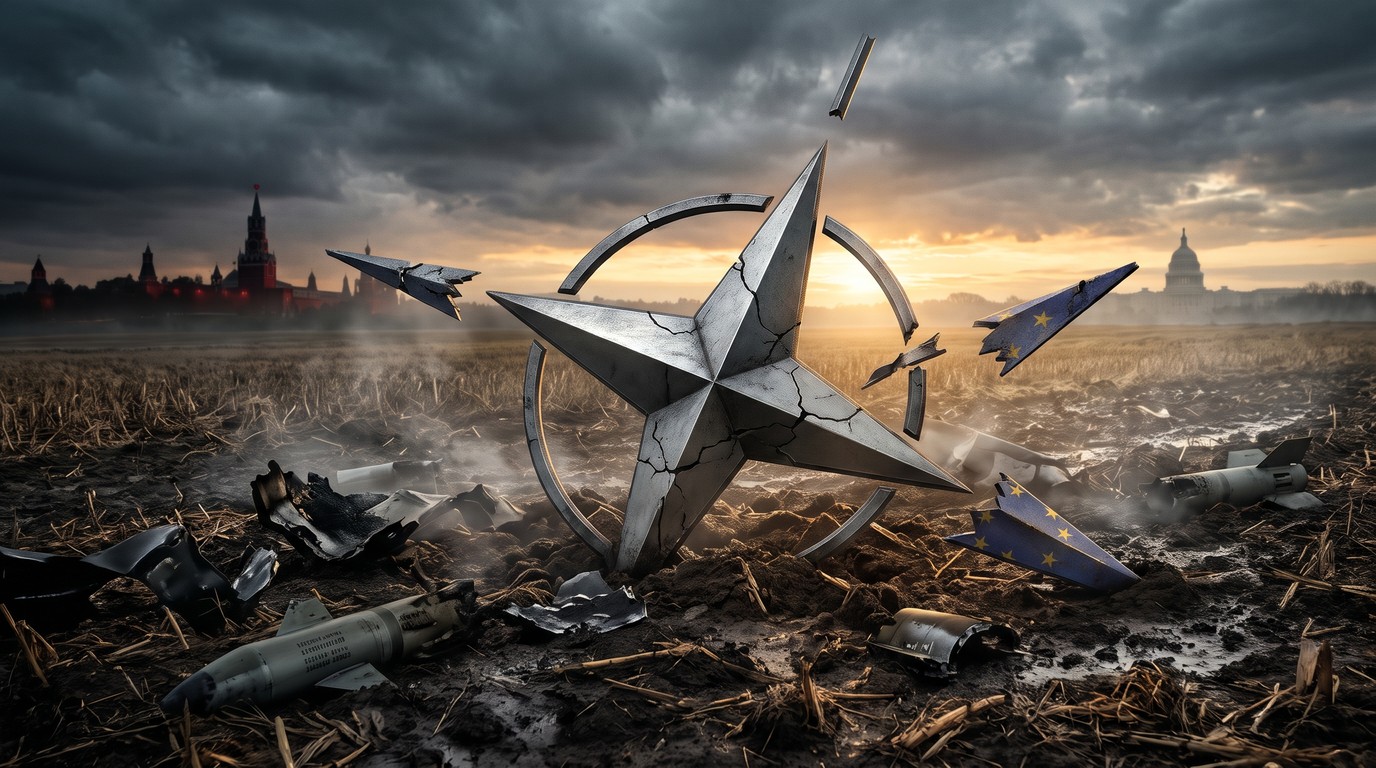
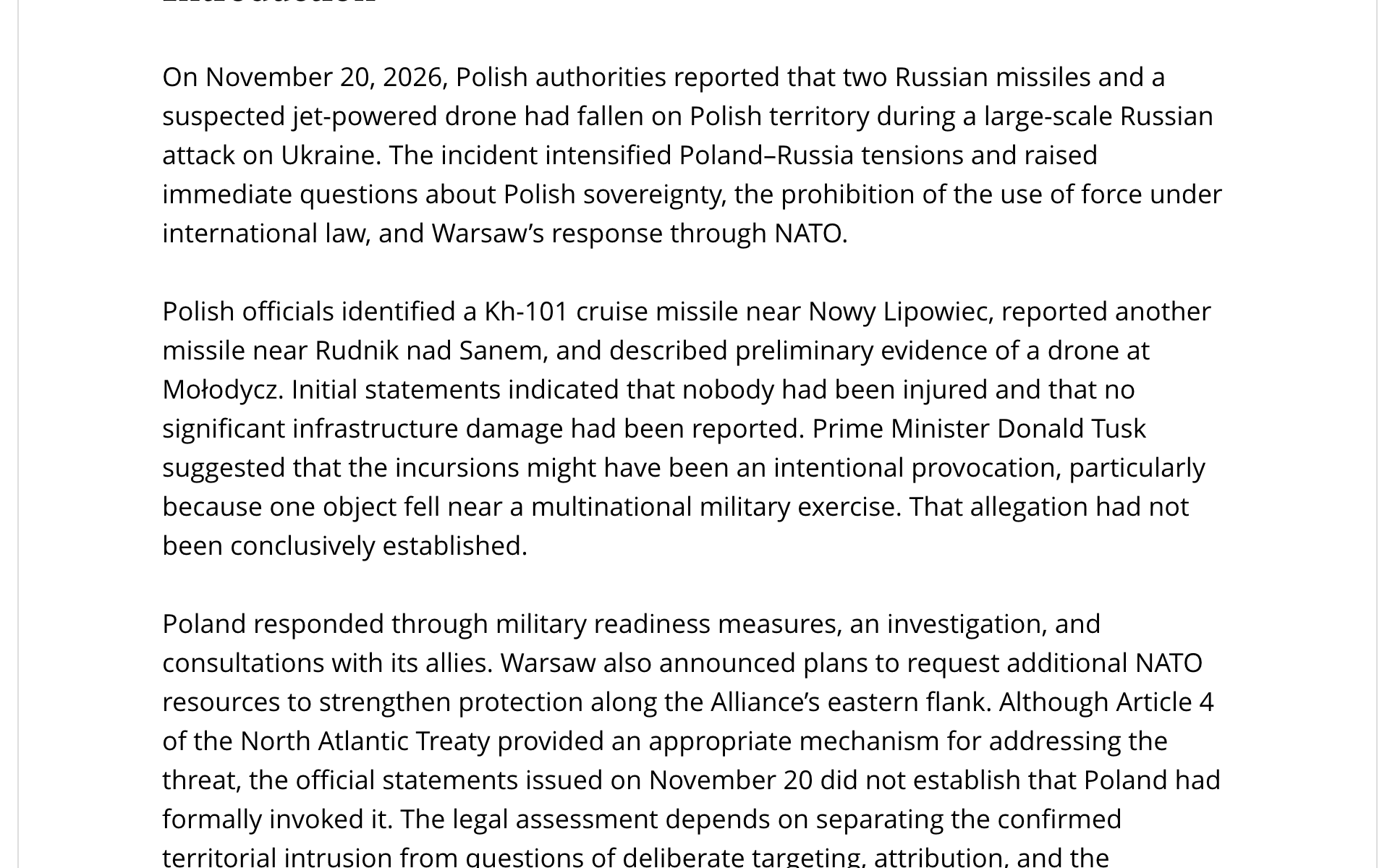
On November 20, 2026, two Russian Kh-101 cruise missiles and a jet-powered drone fell on Polish territory during a massive Russian barrage against Ukraine — 72 Kh-101s, 26 Kalibr cruise missiles, and 503 drones fired in a single overnight salvo. Poland activated its air defenses. NATO jets scrambled. The missile at Nowy Lipowiec in Lublin Voivodeship left a crater in a farmer's field. Nobody died.
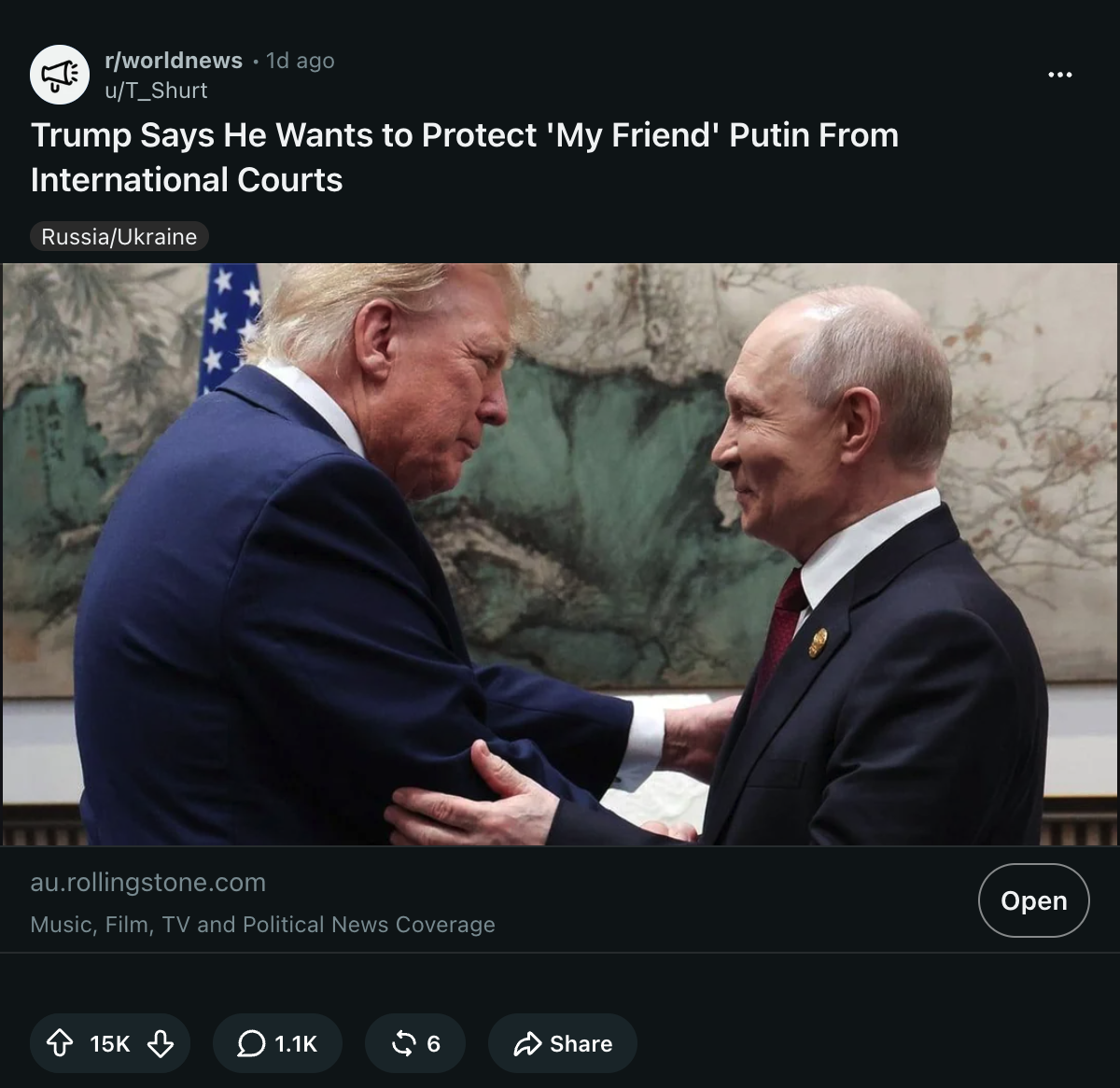
The same week, at the APEC summit in Shenzhen, President Trump greeted Vladimir Putin as "my friend" and offered to shield him from international courts. One row over, Canadian Prime Minister Mark Carney told Putin to his face that Russia's invasion of Ukraine was illegal and economically destructive. And back in Warsaw, Poland's Prime Minister Donald Tusk called the missile strike a "provocation" and summoned his military chiefs.
Three Western leaders. Three different postures. One alliance that is supposed to speak with a single voice when a member's territory is struck.
The question nobody wants to ask is not whether Article 5 applies. It is whether the alliance still has the internal cohesion to answer it.
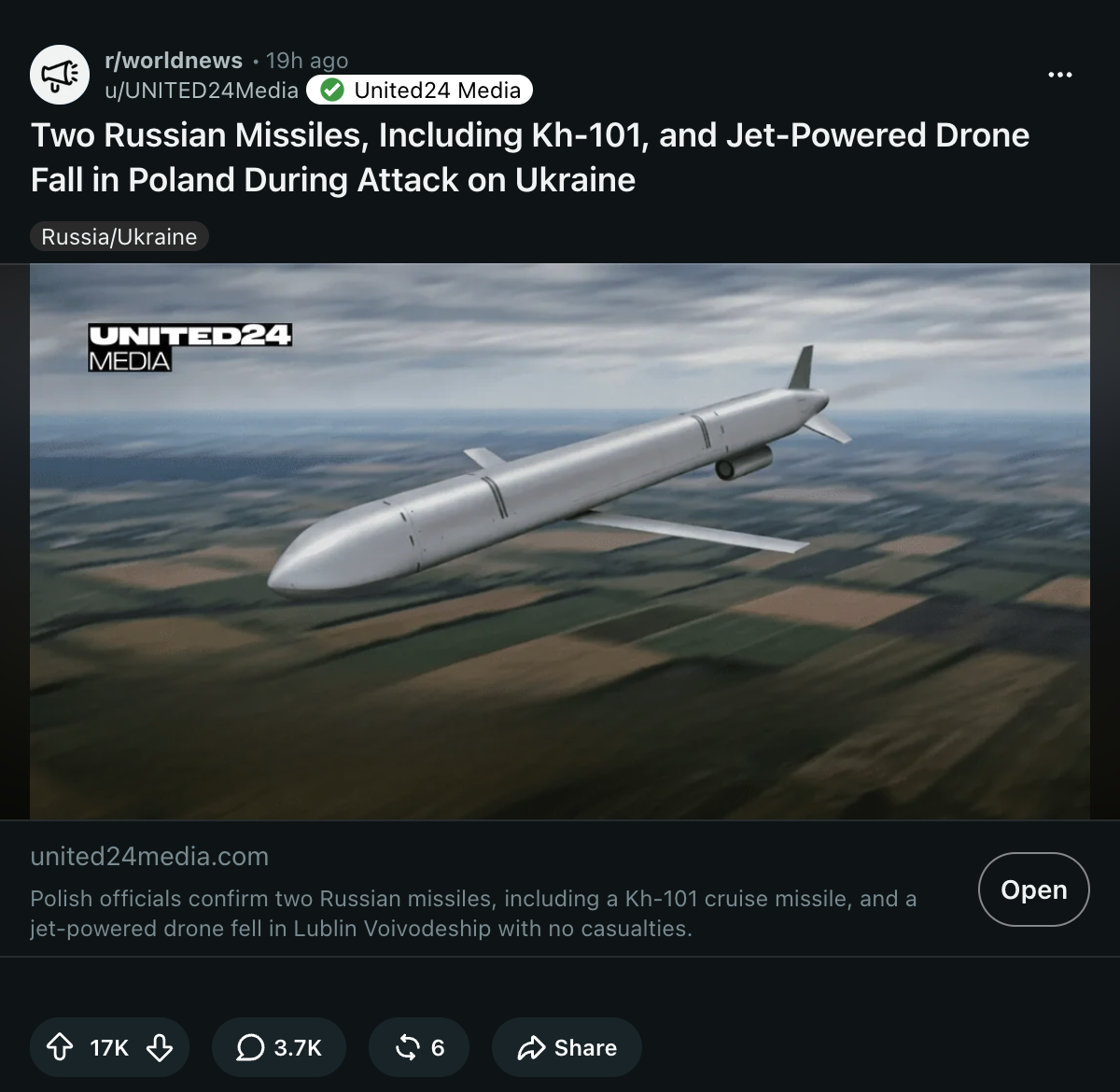
What Actually Hit Poland
The facts are still consolidating — same-day reporting on missile incidents is always preliminary — but the picture is clearer than the 2022 Przewodow incident, where the missile turned out to be Ukrainian.
Polish prosecutors confirmed the Kh-101 was manufactured in the second quarter of 2026 at a factory in the Moscow region. This is unambiguously Russian ordnance. The Kh-101 is an air-launched cruise missile designed for strategic strikes — it does not wander off course like an exhausted drone. Its guidance system uses terrain-matching and satellite navigation. When a Kh-101 enters Polish airspace and covers 100 kilometers before crashing, it was either deliberately directed there or its guidance failed catastrophically.
A second missile and a jet-powered drone also landed on Polish soil. This is not a single debris event. This is a pattern.
Note
The hardware count from this single Russian salvo: 72 Kh-101 cruise missiles, 26 Kalibr cruise missiles, and 503 drones. At least three of those objects overflew Poland's border. NATO Secretary General Mark Rutte called it a "grave violation" of Polish airspace. Poland's defense ministry noted that European military exercises were underway in southeastern Poland at the time.
For context, this was the second Kh-101 to land in Poland in 2026 alone. In July, another struck a field near Tarnawa-Kolonia in Lublin province. Before that, a Russian drone entered Polish airspace in September 2025, triggering Poland's first-ever invocation of NATO Article 4 consultations. The escalation ladder has been climbing in public.
Three Theses on Why This Time Is Different
Thesis 1: The Ambiguity Shield Is Gone
In 2022, the Przewodow incident gave NATO an exit ramp. The missile was Ukrainian. Alliance leaders could express solidarity without confronting the Article 5 question. That ambiguity was comfortable.
No such comfort exists now. The Kh-101 is Russian-made, Russian-launched, and confirmed to have been manufactured this year. As CEPA analysts have argued, each successive violation narrows the range of plausible deniability. Moscow cannot claim this was Ukrainian air defense debris. It cannot claim the drone was unguided. The only remaining narrative is that it was accidental — and after the second time in five months, "accidental" starts to sound like a strategy.
Prime Minister Tusk named this dynamic in September, when he warned that Russia may send drones or missiles into NATO territory and then call the strikes accidental, aiming to show that Article 5 "exists only in theory." He was forecasting today's headline.
Thesis 2: The Alliance Answered With Three Voices, Not One
Here is what happened at APEC, in the same 48-hour window that Russian ordnance was landing in Poland.
Trump met Putin bilaterally. He called Putin "my friend." He suggested he would shield Putin from International Criminal Court prosecution. Rolling Stone reported that Trump told Xi and Putin he did not support using international courts against heads of state — a position that directly undercuts the legal framework Poland might use to pursue accountability.
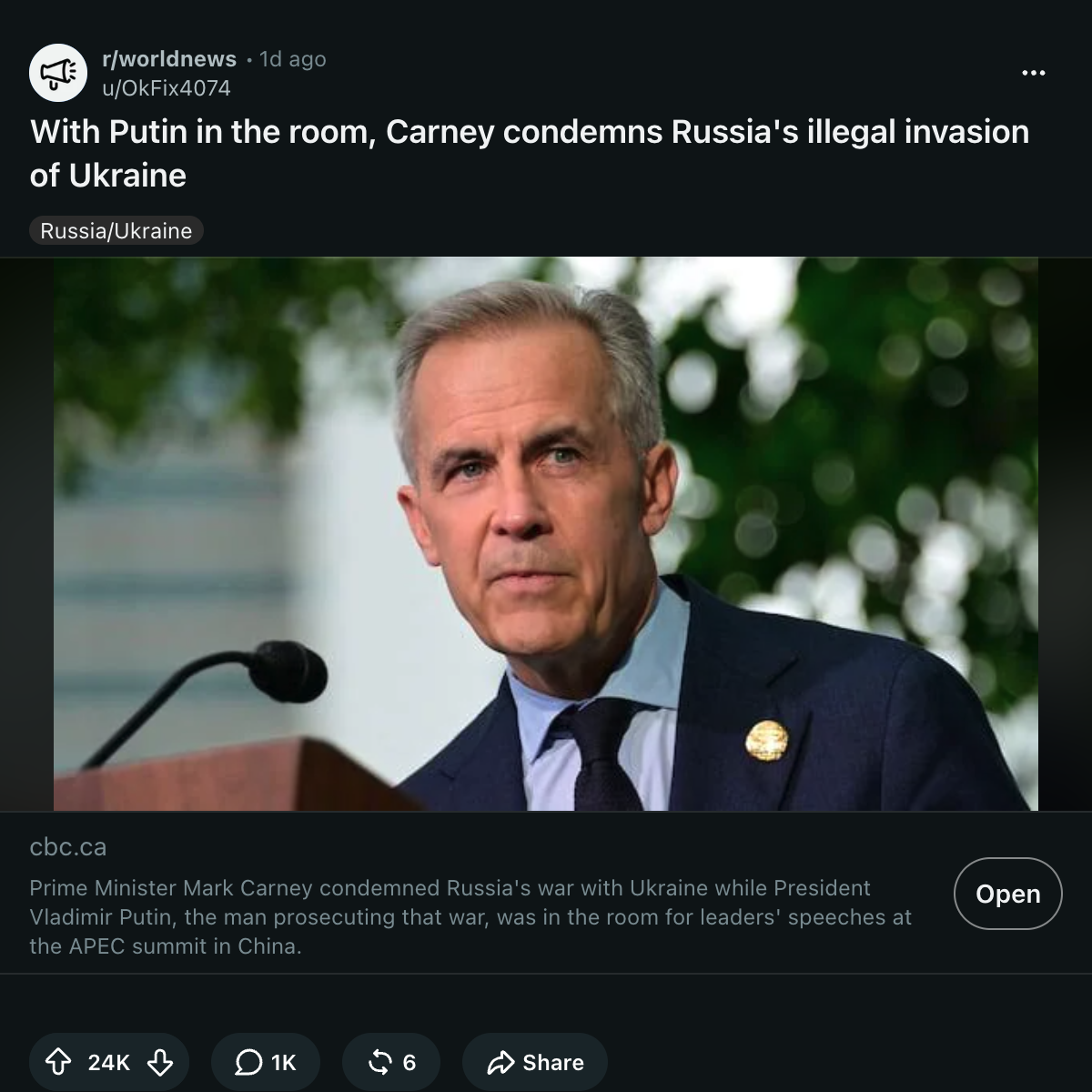
Carney did the opposite. At the APEC rostrum, with Putin sitting one row down, he condemned "Russia's illegal invasion of Ukraine" and its "material economic consequences across the Asia-Pacific." It was the kind of statement that used to come from Washington.
Tusk was neither at the microphone nor at the bilateral table. He was in Warsaw, activating military councils and demanding answers from an alliance whose two most powerful English-speaking members had just demonstrated, in real time, that they cannot agree on whether the man whose missiles landed in Poland is a criminal or a friend.
The Finnish president then revealed that the United States had removed the Ukraine section from a Trump-Xi-Putin peace declaration — confirming that Washington is actively editing out the war that just put ordnance on NATO soil.
Thesis 3: The Prediction Markets Are Pricing the Fracture
Polymarket's Russia-Ukraine ceasefire market — the most liquid geopolitics contract on the platform at $1.26 million in liquidity — has bled from the mid-70s to 68% over the past month. That is not a crash. It is a slow repricing of confidence.
The bleed accelerated this week. The sub-markets on where and when the next diplomatic meeting happens are swinging 20-29% weekly, which means traders are repricing the choreography of peace talks faster than the outcome. When the choreography moves that fast while the headline number drifts down, the market is saying: the process is active but the participants cannot agree on what they are negotiating.
This is exactly what you would expect when one NATO member's leader calls the opposing belligerent "my friend" while that belligerent's missiles are landing on another NATO member's farmland.
Critical
Contrarian Corner: The conventional read is that each incident erodes deterrence. But consider the opposite: Russia's repeated airspace violations have already killed the ambiguity that protected NATO from hard choices. Every new strike narrows the range of excuses. Poland is building the political case for a threshold-lowering response — moving from Article 4 consultations to unilateral air defense activation to, eventually, the question that makes Brussels sweat: What if Warsaw decides it does not need 31 other capitals to agree before it acts? The Polymarket bleed may be pricing exactly that escalation path.
The Escalation Ladder, Mapped
The pattern is not random. Each incident has ratcheted the response one step higher.
September 2025 — Drone incursion. A Russian drone entered Polish airspace. Poland invoked Article 4 — the consultation clause, not the mutual defense clause. NATO launched Operation Eastern Sentry: air defense, intelligence sharing, new assets on the eastern flank.
July 2026 — First Kh-101. A cruise missile crashed in Lublin province. Poland summoned the Russian ambassador. No Article 4 invocation. Tusk said Poland was "not the target." The response was bilateral, not alliance-wide.
September 2026 — Tusk's warning. Based on intelligence from NATO, Ukraine, and U.S. agencies, Tusk publicly warned that Russia may strike NATO territory and claim it was accidental — to prove Article 5 "exists only in theory."
November 2026 — Two missiles and a drone. The largest kinetic event on NATO soil since the alliance was founded. Poland demands more NATO forces. NATO calls it a "grave violation." But no Article 4 invocation has been announced, and no Article 5 conversation has been opened.
The ladder goes up. The alliance response does not.
What Article 5 Actually Requires — and Why It May Not Matter
Article 5 of the North Atlantic Treaty states that an armed attack against one member shall be considered an attack against all. It has been invoked exactly once, after September 11, 2001.
But invocation is not automatic. The attacked country must ask. The other members must agree it constitutes an armed attack — and that determination is made by consensus. Each member then chooses its own response. Article 5 does not require military action; it requires that each member consider the attack on its ally an attack on itself and take "such action as it deems necessary."
This is where the fracture matters. Even if Poland asked for Article 5 consultations — which it has not — the question is whether the United States, whose president just called the aggressor "my friend," would treat a Kh-101 in a Polish field as an armed attack on the United States. The legal language permits ambiguity. The diplomatic optics of this week turn that ambiguity into a credibility crisis.
View original analysis on Diplomacy and Law →
As we analyzed when the Ankara summit exposed NATO's transactional transformation, the alliance has already shifted from a collective security organization to a bilateral marketplace. Today's events are the stress test for that new model: when the marketplace's biggest buyer signals friendship with the attacker, the smaller members have to decide whether the product they purchased — collective defense — still exists.
What the Community Is Saying
The Reddit response to today's events was immediate and enormous. The Poland missile thread on r/worldnews reached 12,400 upvotes within hours, while the concurrent Trump-Putin "my friend" thread hit 13,700 — and the Carney condemnation crossed 23,000. Taken together, more than 49,000 upvotes across three threads that describe a single geopolitical moment from three angles. The crowd is not reading these as separate stories. It is reading them as one.
Separately, a report that Russia planned a mass-casualty sabotage attack in Poland, designed to be blamed on Ukraine, reached 15,400 upvotes the day before. That framing — Russia using Poland as a stage for escalation it can deny — is precisely what Tusk warned about in September.
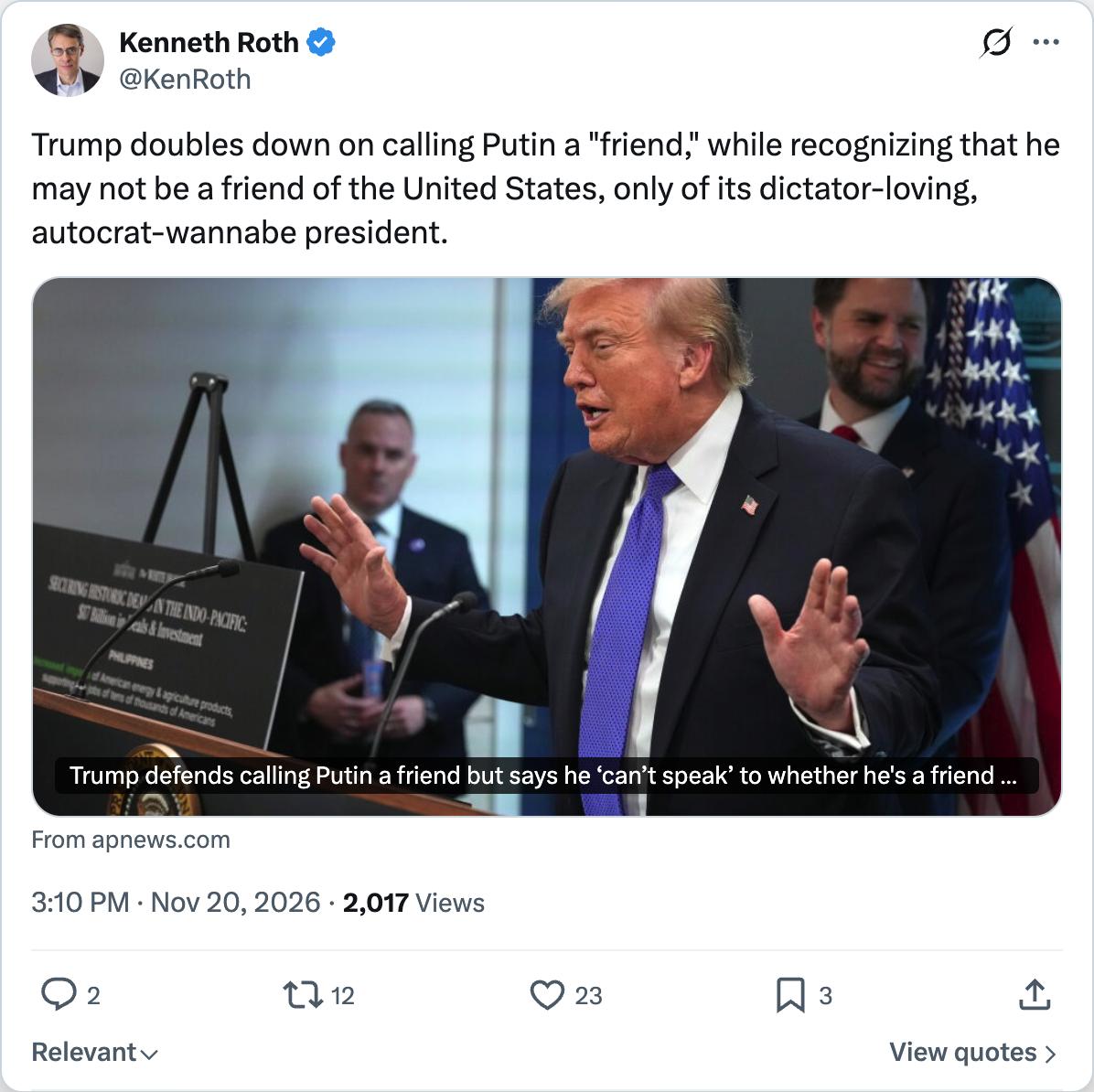
Former Human Rights Watch executive director Ken Roth captured the dissonance on X: Trump "doubles down on calling Putin a 'friend,' while recognizing that he may not be a friend of the United States" — framing the contradiction as one between personal diplomacy and national interest.
Poland's Unilateral Path
Here is the scenario that keeps NATO planners awake.
Poland is now the highest defense spender in the alliance at 4.7% of GDP. It has 8,500 U.S. soldiers on its soil. It has been building out air defense at a pace that outstrips most alliance members. And it has been repeatedly struck by Russian ordnance while its most powerful ally signals warmth toward the aggressor.
The danger is not that Poland invokes Article 5 and gets ignored. The danger is that Poland stops asking. That it builds a unilateral deterrence posture — not because it wants to leave NATO, but because it concludes that the alliance's collective-response mechanism is too slow, too compromised, and too ambiguous to protect a country on the front line.
As we documented last week in our analysis of Europe building a deterrence stack without Washington, the logic of independent European defense is already self-organizing. Poland's trajectory — from Article 4 consultations to bilateral military councils to 4.7% GDP defense spending — is the most advanced expression of that logic.
The question is whether this logic leads to a stronger NATO (through internal competition that raises all spending) or a hollowed-out one (where the alliance exists on paper but each member hedges with its own defense architecture).
What Comes Next
Short term: Poland will push for enhanced NATO air defense coverage over its eastern territory. The demand is already implicit in the France 24 reporting — that European military exercises were underway in southeastern Poland at the time of the strike suggests Warsaw will argue that NATO forces were at risk, not just Polish civilians.
Medium term: Watch for Poland to propose extending air defense over western Ukraine. CEPA has already argued that preemptively shooting down Russian missiles that might hit NATO territory reduces rather than increases escalation risk. If Poland adopts this position formally, it changes the game.
The prediction: Polymarket ceasefire odds will continue to bleed through December. The market is pricing a world where the peace process is real but the alliance backing it cannot agree on its own interests. That is a recipe for stalemate — not escalation, not resolution, but indefinite ambiguity. And ambiguity, as Poland is learning, is the most dangerous state of all.
Tip
The bottom line: The missile in the field is not the crisis. The crisis is the week — Russian ordnance on NATO soil, a U.S. president calling the launcher "my friend," a Canadian prime minister condemning Russia to Putin's face, and a Polish leader left to choose between an alliance that cannot answer and a unilateral path that answers alone. Article 5 was written for a world where the enemy was clear and the alliance was unified. We no longer live in that world. As we tracked through the Ankara summit fracture and the emerging European deterrence stack, the question has shifted from "will NATO respond?" to "which NATO?"
The Arc of Power tracks where military force, economic leverage, and political alignment collide — and where prediction markets reveal what diplomats will not say.
The Desk
About The Arc of Power
The Arc of Power editorial desk delivers rigorous analysis of geopolitics, defense, economic statecraft, and intelligence — examining the forces that shape the global order.
Briefing Access
Request Briefing Access
In-depth geopolitical analysis — power dynamics, defense strategy, and economic statecraft — three times a week. No noise.
Request briefing access