Case file · Geopolitics · 9 min read
Regulatory Capture in Real Time
Trump's AI Cyber EO got a same-day co-sign from Sacks and Altman. That's not consensus — it's coordination.
The Arc of Power ·
Regulatory Capture in 24 Hours: Trump's AI-Cyber EO and the Sacks–Altman Co-Sign
On June 2, President Trump signed an executive order titled "Promoting Advanced Artificial Intelligence Innovation and Security." Within 24 hours, two men blessed it publicly: David Sacks, the venture capitalist who until March served as Trump's AI and crypto czar, and Sam Altman, CEO of the company best positioned to benefit from the order's framework.
Altman's words were precise: "The U.S. should lead on AI by continuing to develop the very best models, making sure they're safe, and getting cyber tools into the hands of trusted defenders. The new EO gets the balance right."
When the AI czar and the leading lab CEO bless the same executive order inside a day, that's coordinated narrative, not coincidence. The question isn't whether the order is good policy. It's who wrote the rules, who they benefit, and what "trusted defenders" actually means when the people defining the term are the ones being trusted.
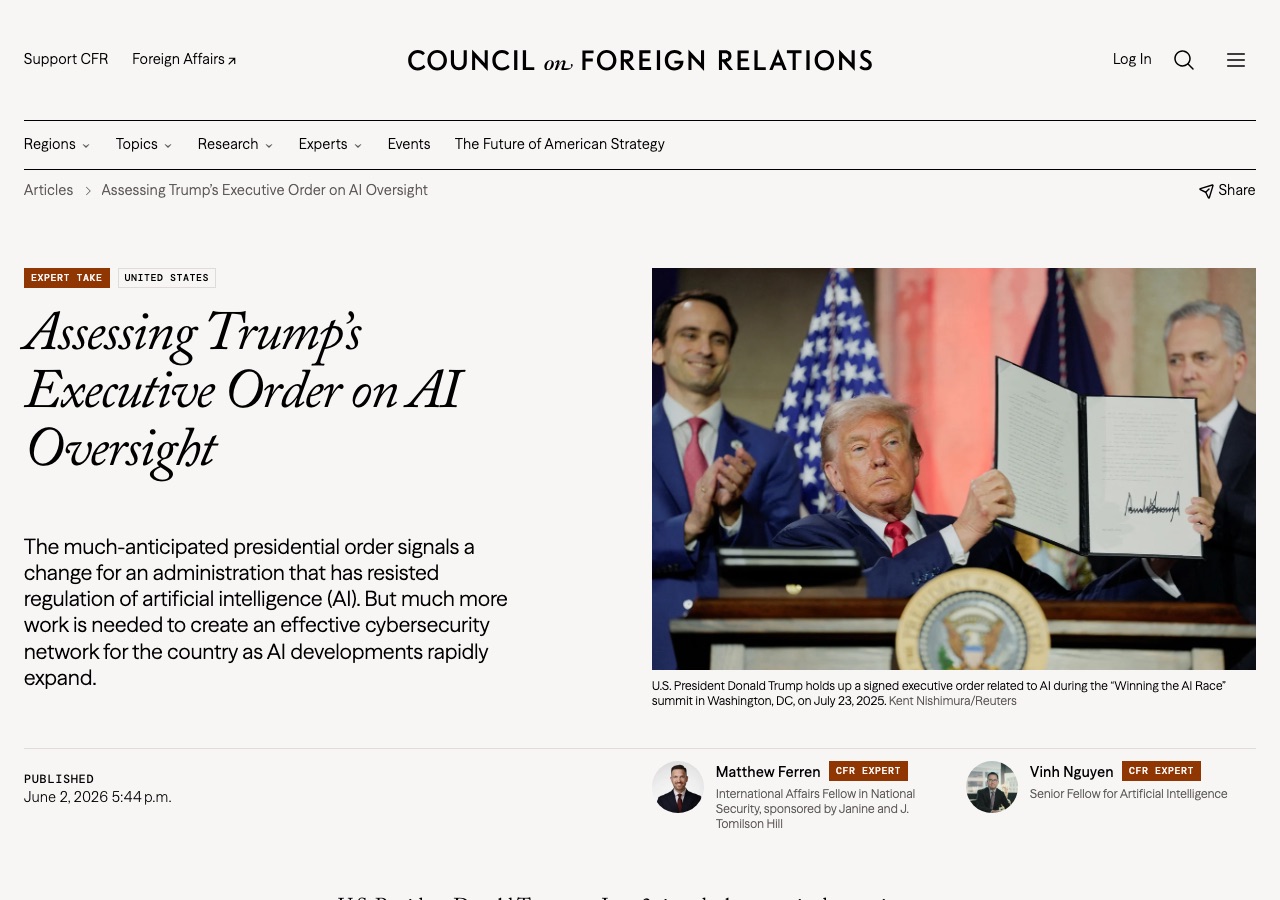
What the Order Actually Does
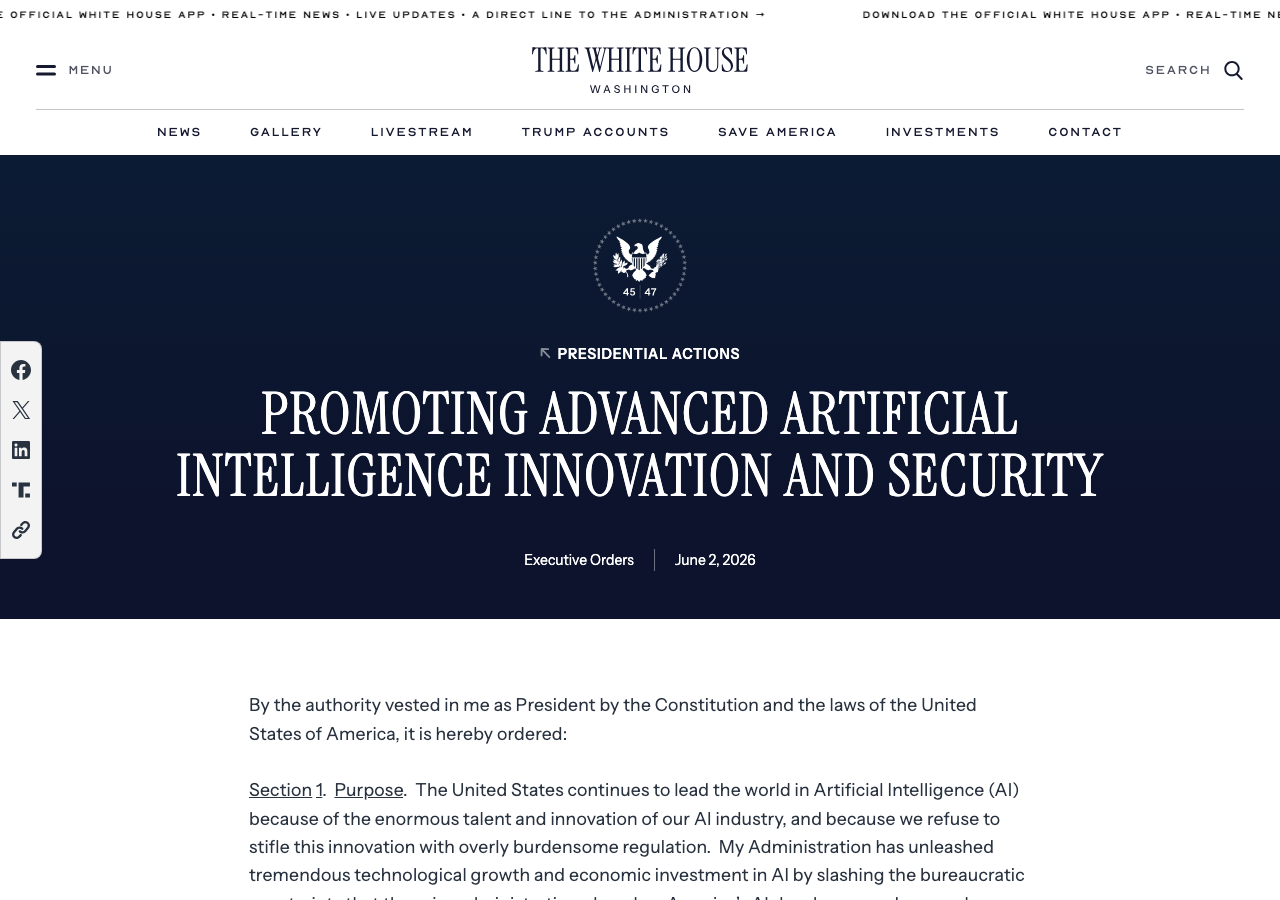
The executive order directs federal agencies to establish a framework for testing "frontier" AI models before public release. The key provisions:
- AI developers are asked to voluntarily share their most capable models with the government up to 30 days before release to other partners
- Federal agencies will develop benchmarks to assess AI models' cyber capabilities
- CISA must establish an "AI cybersecurity clearinghouse" to review vulnerabilities
- The order explicitly bars the government from creating mandatory licensing or preclearance requirements
That last provision is the tell. An executive order that asks companies to volunteer their models for government review — while simultaneously prohibiting the government from ever making that review mandatory — is an order designed to be unenforceable by design.
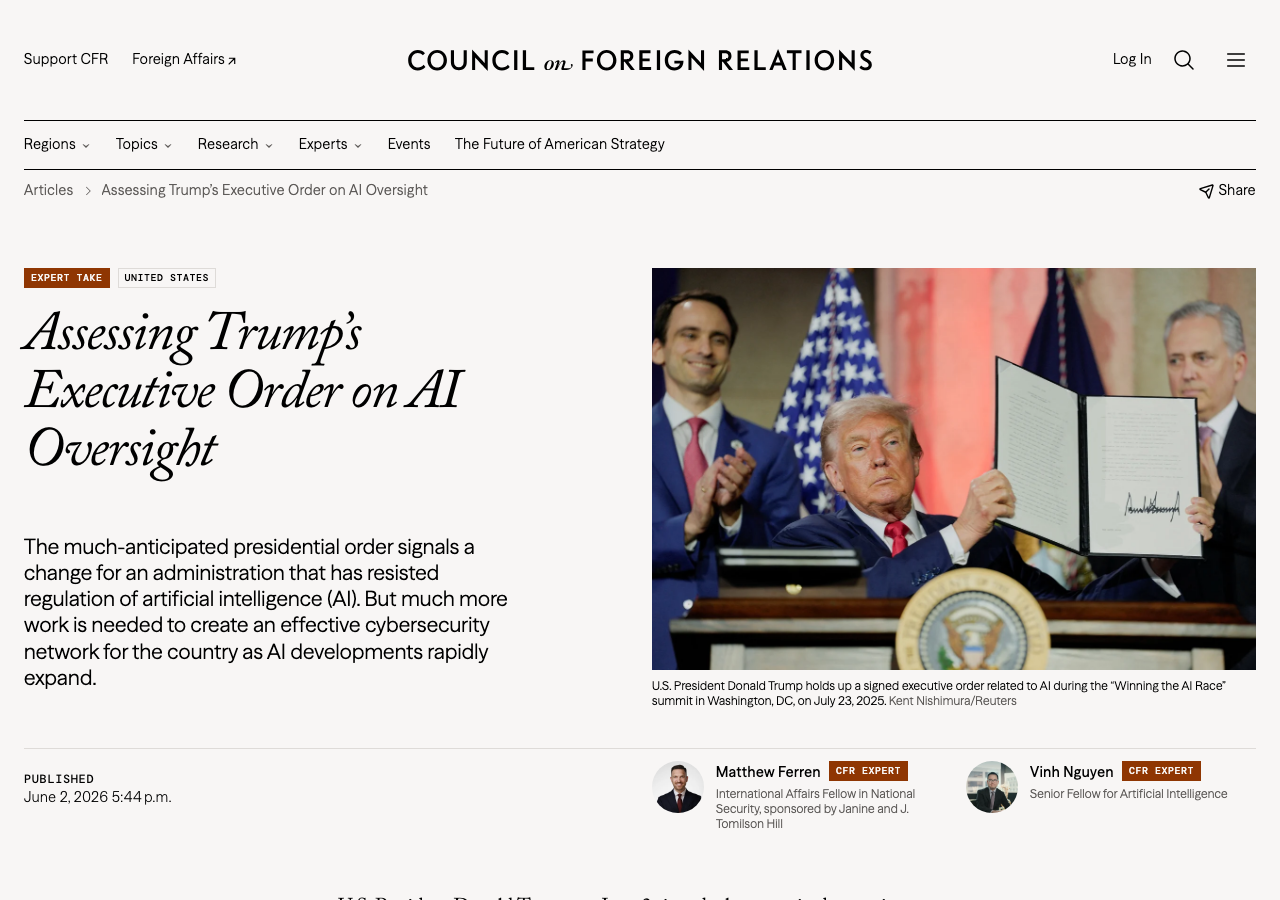
The Sacks Fingerprints
This executive order is the product of a specific lobbying campaign, and the fingerprints are public.
The order was originally drafted with a 90-day review period. Trump was set to sign it. Then David Sacks — who had stepped down as AI czar in late March but retained advisory access — called Trump directly to express concerns. Similar calls came from Elon Musk and Mark Zuckerberg, both of whom are developing advanced AI models that would fall under the order's scope.
Trump indefinitely postponed the signing. When the order finally emerged, the review window had shrunk from 90 days to 30, the compliance framework had shifted from mandatory to voluntary, and the order included an explicit prohibition on creating any future licensing requirement.
Sacks called the revised order "a game changer" because it would allow frontier labs to comply without delaying new model releases.
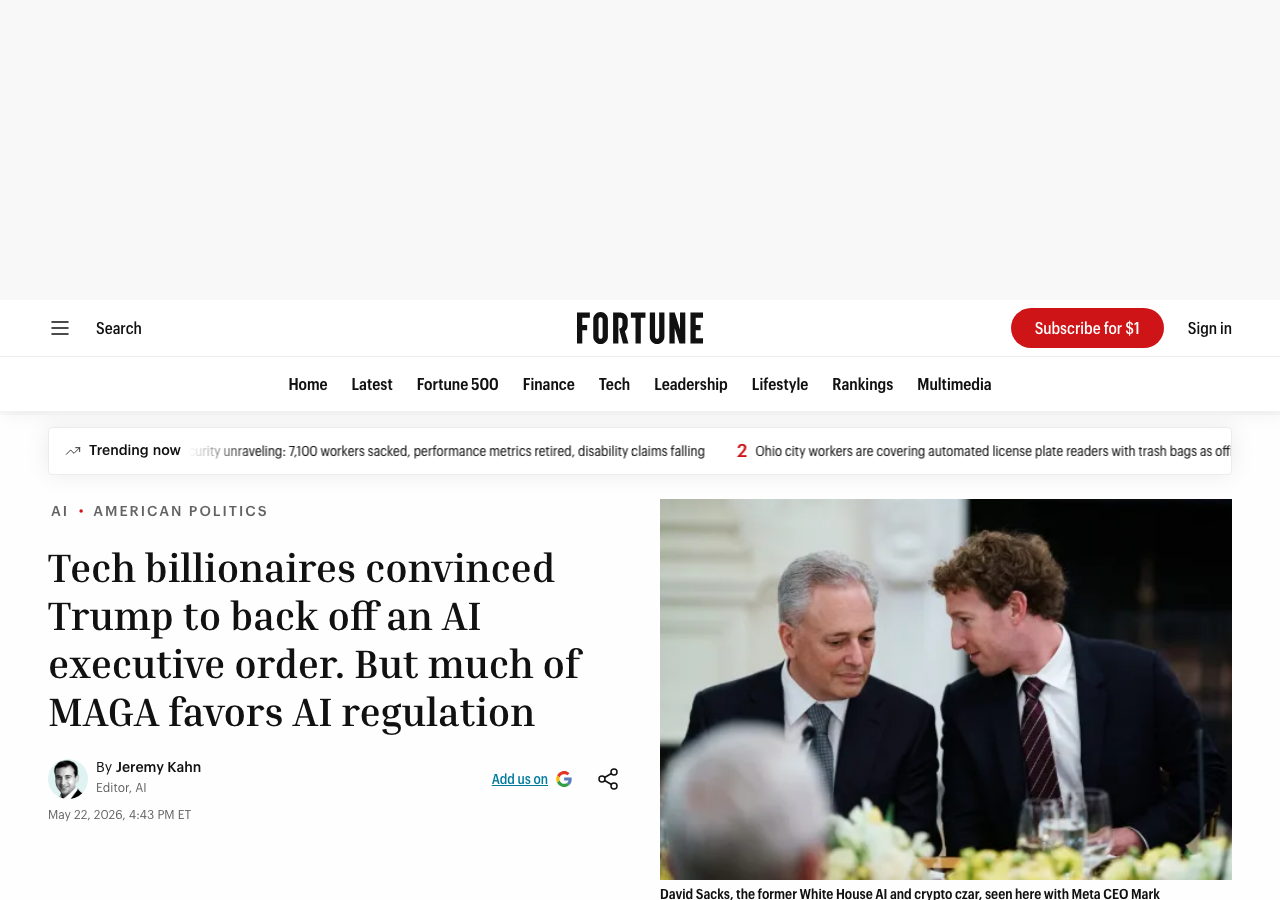
Read that again: a venture capitalist with stakes in hundreds of companies with ties to AI successfully lobbied to weaken the order, then publicly praised the weakened version as getting "the balance right." This is textbook regulatory capture — not the slow, institutional kind that takes decades, but the accelerated version that plays out in phone calls and public statements within weeks.
What "Trusted Defenders" Really Means
The phrase "trusted defenders" appears throughout the order and in Altman's co-sign. It sounds neutral — who wouldn't want cyber tools in the hands of trusted defenders?
But the framework doesn't define who counts as a "trusted defender." It delegates that determination to a process in which the same frontier AI labs submitting models for review will also help shape the benchmarks used to evaluate them. The companies being regulated are participating in the design of their own regulation.
This is the structural issue. When NPR describes the order as seeking "voluntary review", the voluntariness isn't the problem. The problem is that the order creates an insider track — a "trusted" tier of AI developers who cooperate with the government — without any public criteria for trust, without independent oversight of the testing process, and without consequences for non-participation.
The companies that cooperate gain preferential access to government contracts and a de facto seal of approval. The companies that don't cooperate aren't penalized, but they're excluded from the "trusted" network. The incentive structure rewards proximity to power, not safety.
The Altman–Washington Dance
Altman met with lawmakers and White House officials on Wednesday, the day after the signing — meetings that were scheduled before the order dropped, suggesting coordination on timing. OpenAI simultaneously released a policy paper that, per SiliconANGLE, "diverges from the White House on AI safety" in some areas while endorsing the EO's core framework.
This is a familiar Washington choreography: appear to disagree on the margins while endorsing the structure that benefits you. OpenAI can point to its "divergent" policy paper as evidence of independence while supporting an EO that creates exactly the voluntary-but-advantageous compliance framework OpenAI wanted.
The timing matters for another reason. OpenAI is heading for an IPO. An executive order that establishes a cooperative government-industry framework — without mandatory compliance costs — is the best possible regulatory backdrop for a company trying to convince investors that AI regulation won't crush margins.
The Anthropic Factor
The order was triggered by the debut of Anthropic's Mythos model, which reportedly possesses unprecedented cyber capabilities. Security concerns around Mythos accelerated the White House timeline.
But Anthropic's response has been conspicuously muted. Google's Kent Walker called the EO "an important step forward." Anthropic and OpenAI did not immediately respond to Reuters' request for comment.
The silence is strategic. Anthropic can't oppose an order framed around cybersecurity — not when its own model was the cited catalyst. But it also can't endorse an order that was weakened through lobbying by competitors with direct lines to the president. The company that triggered the order has the least ability to shape it.
The Pattern
This is the third instance in 2026 of AI infrastructure policy being shaped by the companies it regulates:
- January: The revocation of Biden's AI safety executive order, pushed by the same coalition of Sacks, Musk, and Zuckerberg
- May: The shelving and weakening of the cyber EO after direct lobbying calls to Trump
- June: The signing of the weakened order, immediately co-signed by the lobbyists who weakened it
Each iteration follows the same pattern: a legitimate safety concern triggers a policy response; the companies most affected lobby to weaken it; the weakened version is presented as "balanced" and "pro-innovation"; the companies that lobbied for the weakening publicly endorse the result.
The word for this pattern is regulatory capture. The speed at which it's happening in AI — weeks rather than years — is the novel element. The mechanism is as old as Washington itself.
The MAGA Divide on AI
There's a dimension the co-sign narrative obscures: much of the MAGA base actually favors AI regulation. Polling consistently shows that Trump voters worry about AI displacing jobs and undermining safety more than Democratic voters do. The populist wing of Trump's coalition — the voters who put him in office — would prefer stronger oversight, not weaker.
The tech billionaires who lobbied to weaken the order represent the donor class, not the voter base. This creates an inherent tension: the administration is siding with Silicon Valley donors against its own voters on AI policy, while framing the result as "pro-innovation" and "balanced." The populist backlash hasn't materialized yet, but the structural conditions for it are in place.
If a frontier AI model causes a significant cybersecurity incident in the next year — a realistic scenario given the pace of capability advancement — the voluntary framework will be under intense pressure. The question becomes: does the administration double down on voluntary compliance, or does the MAGA populist wing force a pivot toward mandatory oversight? The answer depends on which constituency has more influence — the donors who shaped the order, or the voters who elected the president.
Critical
The Polymarket implications: existing AI regulation markets are thin and stale — the "Trump orders federal review of AI model releases" market has only $2.6K in liquidity and has already passed its resolution date. No clean live market exists for the broader regulatory capture thesis. This is itself a data point: the prediction markets haven't priced the structural risk yet.
What to Watch
The real test comes in implementation. The order mandates several deliverables within 30-180 days:
- CISA must issue Binding Operational Directives for AI-enabled cyber defense
- Agencies must develop frontier model testing benchmarks
- The "AI cybersecurity clearinghouse" must be established
Watch who sits on the committees that define the benchmarks. Watch which companies are invited to be "trusted partners" in early testing. Watch whether the voluntary framework creates a two-tier market — insiders who cooperate and outsiders who don't — without any legislative basis for the distinction.
The executive order isn't regulation. It's the infrastructure for future regulation, built by the companies that will be regulated. That's not a conspiracy. It's just how Washington works — accelerated to AI speed.
The Desk
About The Arc of Power
The Arc of Power editorial desk delivers rigorous analysis of geopolitics, defense, economic statecraft, and intelligence — examining the forces that shape the global order.
Briefing Access
Request Briefing Access
In-depth geopolitical analysis — power dynamics, defense strategy, and economic statecraft — three times a week. No noise.
Request briefing access