Case file · Defense · 12 min read
The Pentagon Gave Its Future to the Billionaires
Hegseth's Project Meridian puts Musk and Luckey in charge of picking the next war's weapons. Their companies already sell them.
The Arc of Power ·
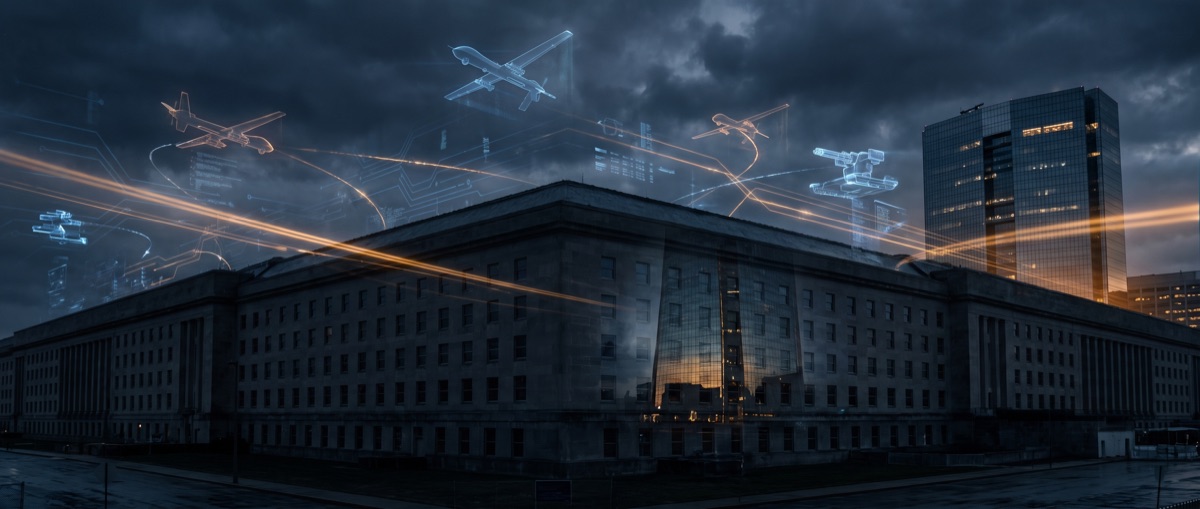
On September 30, 2026, Defense Secretary Pete Hegseth stood before 600 mid-grade officers at Marine Corps Base Quantico and announced what he called "the fastest peacetime shift in modern military history." Two new initiatives — Autonomous Warfare Command (AutoWarCom), a four-star combatant command for drones and robotics, and Project Meridian, a 120-day study to "ruthlessly map the trajectory of future warfare" — would redefine how America builds and fights wars. The co-directors of Project Meridian: Elon Musk, Palmer Luckey, and Newt Gingrich.
This is the part where the Pentagon will tell you that MITRE, the nonprofit research organization, will manage conflict-of-interest safeguards. This is also the part where you should remember that SpaceX holds $8 billion in active defense contracts and that Anduril's Pentagon enterprise agreement runs up to $20 billion over ten years. The men writing the requirements are the men selling the products. That is not innovation. That is regulatory capture wearing a uniform.

What Hegseth Actually Announced
Hegseth's "State of the Force" address contained three interlocking moves, each significant on its own, devastating in combination.
Autonomous Warfare Command (AutoWarCom) is a proposed four-star combatant command — the first new one since Space Command in 2019 — with "service-like authorities" to scale drones, robotics, and AI across every branch. The target date is October 1, 2027. It requires Congressional approval, and while the Senate's FY2027 defense bill already calls for a Robotic and Autonomous Systems Combatant Command, the House has not acted. In the interim, Project Agincourt, run by Defense Innovation Unit head Owen West, will serve as the stepping stone — a "warfighting acquisition" model that moves decision-making and funding closer to combat units.
Project Meridian is the 120-day future-warfare study that has drawn the most scrutiny. Co-directed by Musk, Luckey, and Gingrich under Pentagon CTO Emil Michael, it will "identify critical capability gaps" and "propose actionable solutions." The final report — public presentation plus classified annex — is due January 28, 2027.
The officer purge completes the trifecta. Hegseth has already fired 26 generals and admirals, blocked 55 promotions, and announced a target of reducing flag officers by 20%. Senator Jack Reed warned this creates a chilling effect: "Don't give your best military advice, or you may be next." Senator Thom Tillis, a Republican, called the removals "arbitrary and capricious."

Read the full NBC News report →
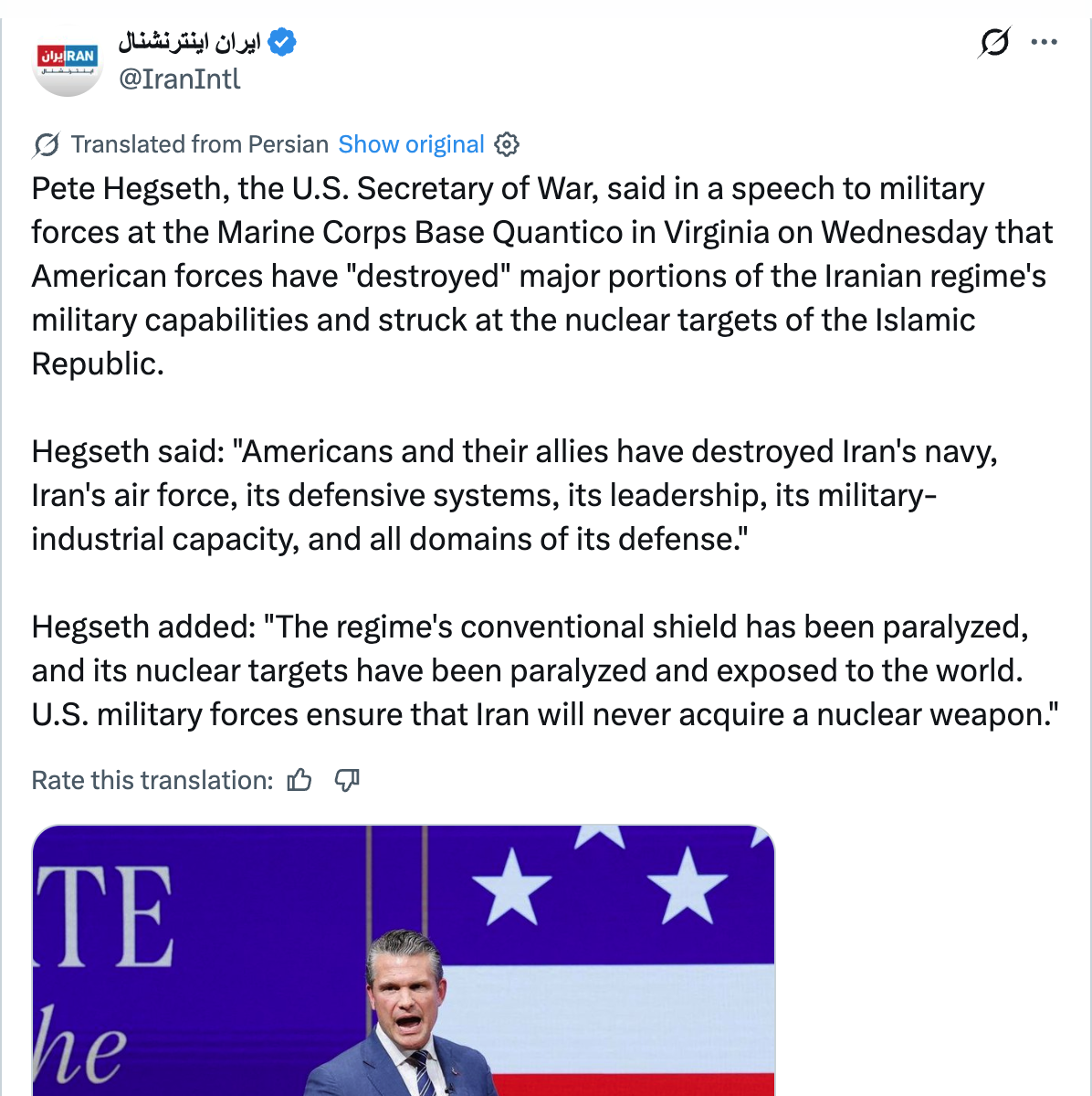
The combination matters. You cannot understand Project Meridian without the purge. When the generals who would normally push back on billionaire advisory panels are being systematically removed, the advisory panel's recommendations face no institutional friction. The road is being cleared and paved simultaneously.
Three Lessons from the Meridian Gambit
1. The Timeline Is the Tell
The 120-day clock is not arbitrary. A report due January 28, 2027 lands squarely before the FY2028 budget cycle begins in earnest. In Washington, budget recommendations that arrive before the markup process starts are the ones that shape the markup process. Meridian's recommendations will not merely inform the next defense budget — they will preconfigure it.
Critical
The 120-day Meridian deadline lands in January 2027 — before the FY2028 budget cycle. The companies writing the recommendations are the companies that will bid on the resulting contracts.
This is how procurement capture works. You do not need to rig the bidding process if you wrote the requirements document. When Musk and Luckey recommend that the military needs autonomous interceptor drones with edge-computing AI and space-based mesh communications, those requirements will describe Anduril's product roadmap and SpaceX's Starshield constellation with suspicious precision. The bidding is fair. The game was decided before it started.
Compare this to the Eric Schmidt-led Defense Innovation Board from previous administrations. Schmidt advised on software modernization, but Google did not manufacture the F-35. The structural difference is that Musk and Luckey's companies are hardware-first defense contractors. They do not just consult on the future of warfare — they build and sell the weapons.

Read the full Foreign Policy analysis →
2. The CTO Is Compromised
Emil Michael is the Pentagon's Chief Technology Officer and the man overseeing Project Meridian's day-to-day operations. Before this role, he was Uber's Chief Business Officer. Between those two jobs, he made some investments.
According to government ethics records, Michael made up to $24 million in profit selling shares in Musk's xAI company — the same Elon Musk he now supervises on Project Meridian. He also sold his Perplexity AI stake for between $5 million and $25 million. Federal law prohibits officials from taking actions that benefit their own financial interests. Michael's defense: he divested. The timing: conveniently, just after the Pentagon entered agreements with xAI.
Critical
Emil Michael, the Pentagon CTO overseeing Project Meridian, made up to $24 million in profit selling xAI stock while managing the department's AI contracts.
This is the person managing the "strict conflict-of-interest safeguards." The fox is not just guarding the henhouse — the fox built the henhouse, sold shares in the henhouse, and is now writing the rules for future henhouses.
Michael himself articulated the Pentagon's real vision when he said the department wants "five more Andurils and Palantirs and SpaceXs." That is a legitimate industrial-base aspiration. It is also an admission that the current crop of defense-tech companies are not merely contractors — they are the model the Pentagon wants to replicate. You cannot simultaneously treat someone as your template for the future and maintain adversarial oversight of their recommendations.
3. The Drone Command Is Real — and That Makes the Capture Worse
Here is where the contrarian case deserves a hearing. AutoWarCom is not a bad idea. Ukraine's experience has demonstrated beyond debate that autonomous systems are the future of warfare. As Hegseth noted, "Ukraine's lesson is not that one type of drone wins wars, but rather the need for a purpose-built system that maximizes the ability to adapt." We have already covered this shift in depth — NATO's 100-year drone pact with Ukraine represented a structural commitment to autonomous warfare that transcended any single administration.
The FY2027 budget request of $54.6 billion for the Defence Autonomous Warfare Group — up from $226 million — is a 240x increase that signals genuine institutional commitment. The traditional defense primes (Lockheed, Raytheon, Boeing) have delivered cost overruns measured in decades and trillions. The F-35 program alone has cost over $400 billion with persistent readiness problems. Something has to change.
Note
SpaceX holds $8 billion in 2026 defense contracts. Anduril has a Pentagon enterprise agreement worth up to $20 billion over 10 years. The FY2027 budget requests $54.6 billion for autonomous warfare — a 240x increase.
But the fact that the reform is needed makes the capture more dangerous, not less. When the answer to a real problem is filtered through a process designed to benefit specific companies, you get reforms optimized for the reformers' balance sheets rather than the warfighter's needs. The resulting force structure may be genuinely more lethal and agile — and also structurally dependent on two billionaires' companies in ways that create new single points of failure.
The Pattern We Have Seen Before
This is not the first time this administration has handed government functions to the industries they regulate. We documented the same pattern when AI policy was delegated to David Sacks and Sam Altman — industry leaders writing the rules that govern their own companies. The Pentagon version is more consequential because defense procurement involves classified requirements, sole-source contracts, and budgets measured in tens of billions.
And there is a coercive dimension that civilian tech regulation lacks. When Anthropic declined a Pentagon contract on ethical grounds, it was blacklisted. The message to the defense-tech ecosystem is clear: cooperate and you get to write the future. Resist and you get cut out. That is not a market — it is a protection racket with acquisition authority.

The Project on Government Oversight (POGO) views Musk and Luckey "strictly as vendors trying to sell products, not as grand strategists." That framing captures the structural problem precisely. Grand strategy requires the ability to recommend options that disadvantage your own portfolio. When your Starshield satellites and autonomous interceptors are the product, every war-of-the-future scenario conveniently requires more of them.

Read the full Gizmodo report →
The Contrarian Case, Honestly Considered
Critical
Contrarian Corner: The real question is not whether Musk and Luckey have conflicts of interest — they obviously do. The question is whether the alternative is worse.
The defense establishment that Project Meridian is designed to disrupt has its own conflicts of interest, and they are older and deeper. The revolving door between Pentagon flag officers and defense contractor boards is so well-worn it has its own Wikipedia page. General Dynamics, Raytheon, and Lockheed have spent decades embedding themselves in the acquisition process through institutional relationships, campaign contributions, and the quiet promise of post-service employment.
Hegseth himself refused to commit to not joining a defense contractor after leaving public service. His Venmo contacts, left on public, included C-suite executives from Palantir and Anduril.
The honest version of the argument for Meridian is this: SpaceX actually reuses rockets. Anduril actually ships autonomous systems at commercial speed. The traditional primes actually do charge $44 for toilet seats. If the choice is between captured-but-innovative and captured-but-sclerotic, the innovation at least produces capability. The question is whether MITRE's safeguards — which remain deliberately vague — can prevent the recommendations from being a $54.6 billion shopping list with Musk's and Luckey's names on every line item.
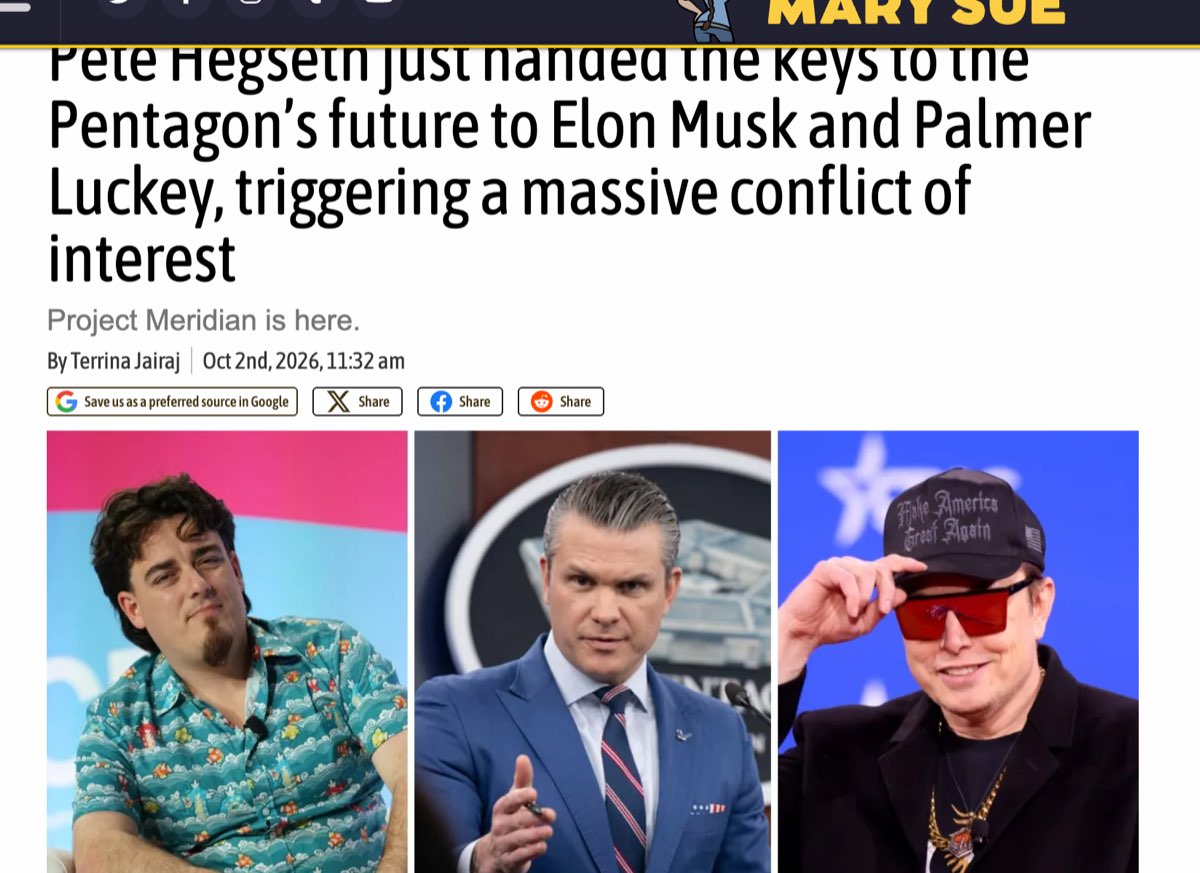
Read the full Mary Sue investigation →
What Happens Next
Watch three things.
The January 28 report. Meridian's public findings will reveal how precisely the recommendations map to SpaceX and Anduril product lines. If the report recommends "autonomous mesh-networked interceptor swarms with space-based command and control," you will know the game before the FY2028 hearings begin.
Congressional pushback. AutoWarCom requires legislation. The Senate Armed Services Committee has already drafted compatible language, but the House has not acted. The general-officer purge has alienated Republican defense hawks like Tillis. Whether Congress adds meaningful oversight provisions to the AutoWarCom authorization — or rubber-stamps the Pentagon's preferred structure — will determine whether this command has institutional independence or functions as a procurement vehicle.
The FY2028 budget request. When the defense budget drops in early 2027, compare its autonomous-warfare line items against Project Meridian's recommendations. If the overlap is greater than 80%, the capture is complete. The budget request is the document that converts advisory recommendations into binding procurement authority. That is where the money moves.
The Pentagon has a real problem — its acquisition system is broken and the autonomous-warfare revolution will not wait for bureaucratic reform. Hegseth's diagnosis is correct. His treatment — handing the prescription pad to the pharmaceutical companies — is the oldest grift in Washington, dressed up in Silicon Valley's move-fast-and-break-things vocabulary.
The future of American warfare is being designed by the men who will profit from it. That sentence should bother you regardless of where you sit on the political spectrum. The question is not whether autonomous weapons are the future. They are. The question is whether that future should be architected by its biggest vendors, supervised by a CTO who made millions on their stock, and implemented by a Pentagon stripped of the institutional voices that might say "no."
We already know the answer this administration prefers. Watch the budget.
The Desk
About The Arc of Power
The Arc of Power editorial desk delivers rigorous analysis of geopolitics, defense, economic statecraft, and intelligence — examining the forces that shape the global order.
Briefing Access
Request Briefing Access
In-depth geopolitical analysis — power dynamics, defense strategy, and economic statecraft — three times a week. No noise.
Request briefing access